New from Cub Climb · Ages 3 and up
Learn to read music, one note at a time.
Cub Climb Melody puts a note on the staff and asks your child to tap its name. A right answer plays the note on their own instrument and earns a star. Five in a row is a party, and the cub plays back the tune those five notes make. A cub climbs with them, one new set of notes at a time.
- C
- D
- E
- F
- G
- A
- B
iPhone and iPad. Free to start, then $14.99 once for the whole family. No account, no ads, nothing about your child leaves the device.
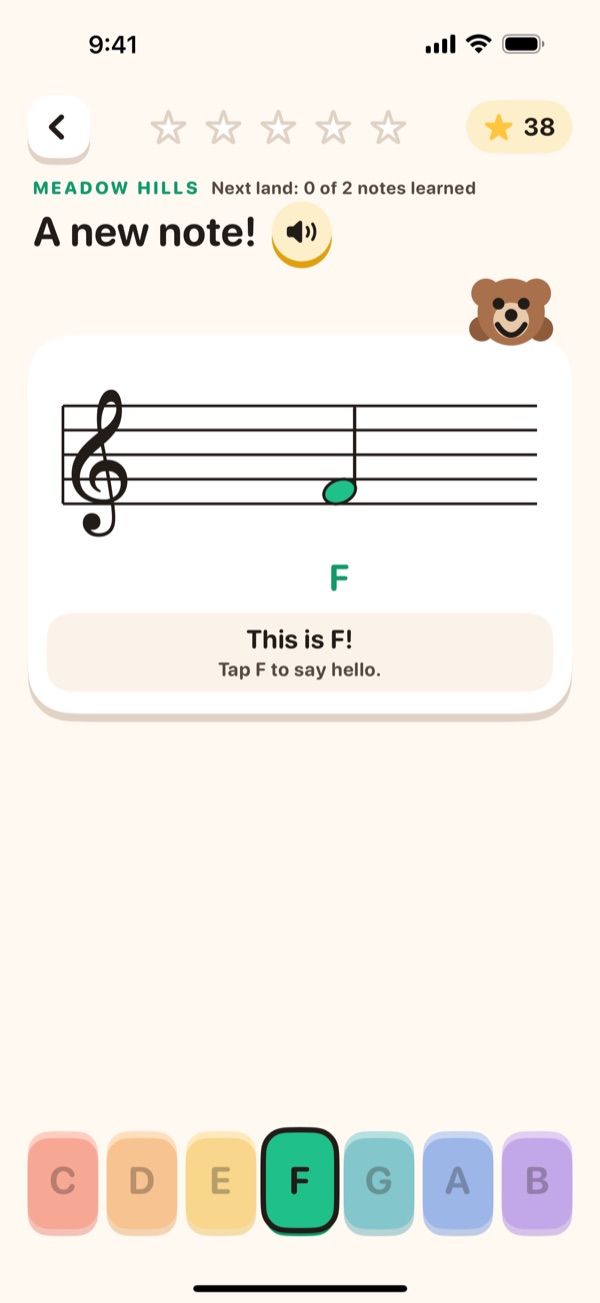
Inside the app
A note, its name, and a cub who climbs with them.
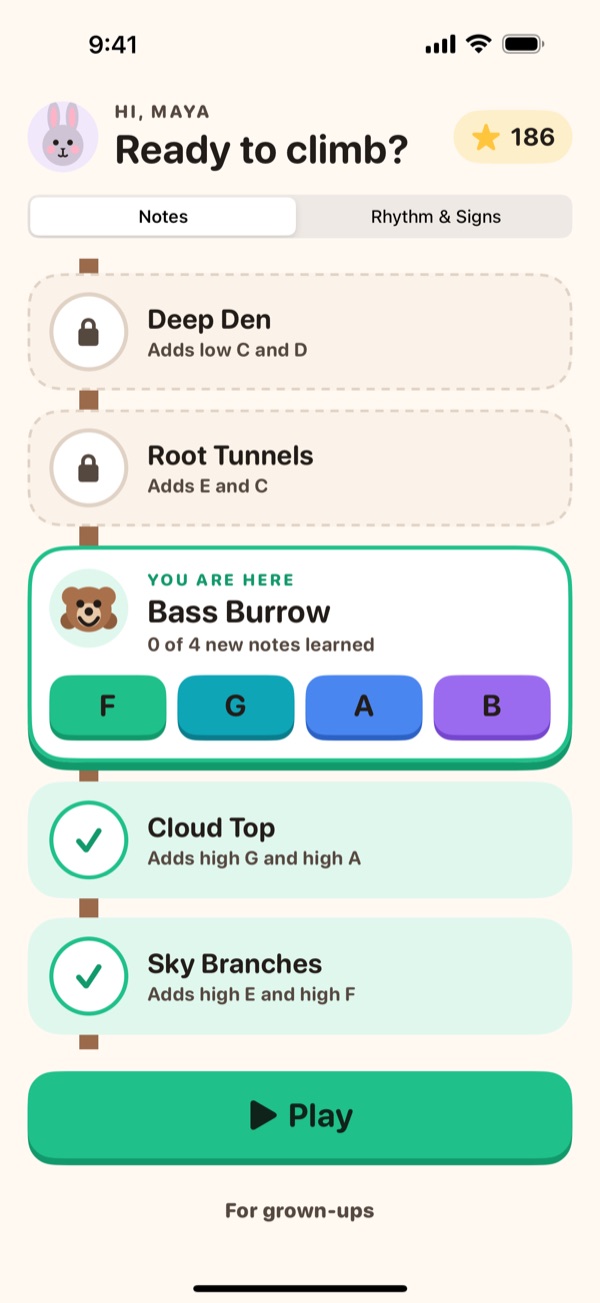
The climb
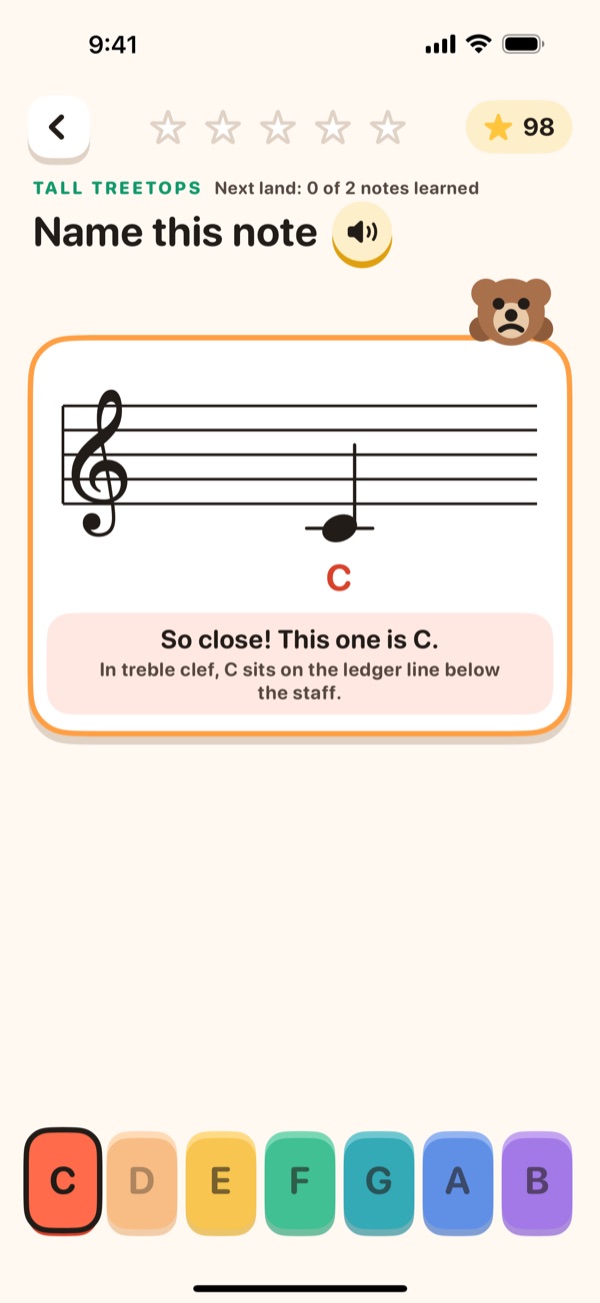
A wrong answer, and a hint
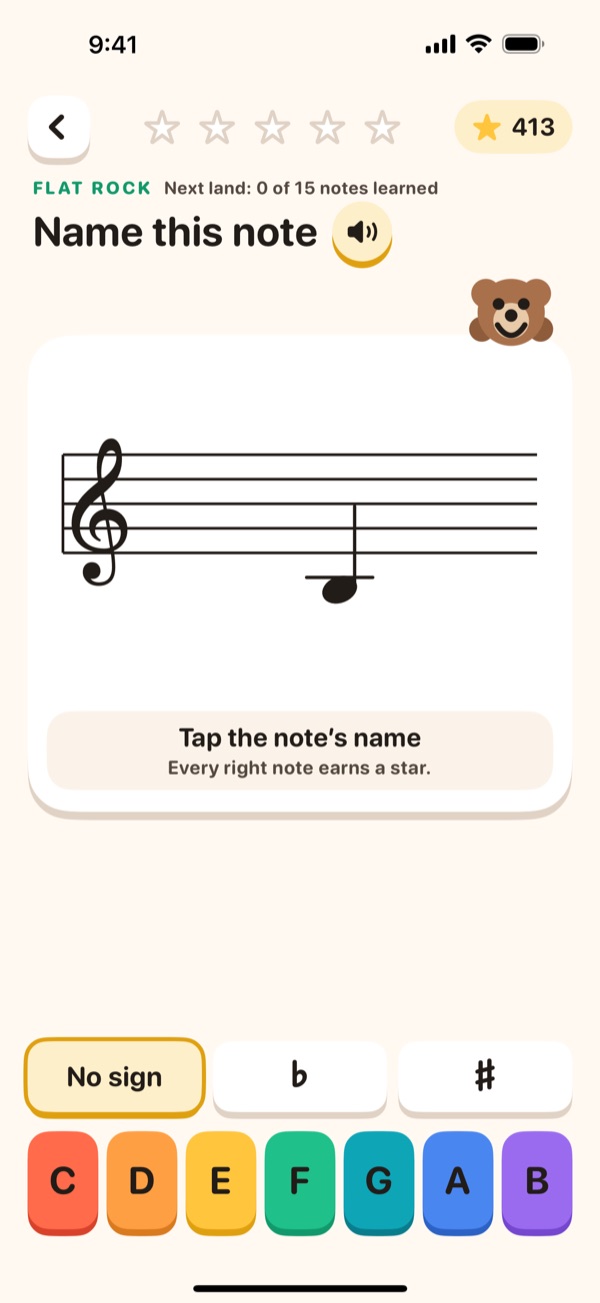
Sharps and flats
Rhythm & Signs
How it works
Every card ends with the answer seen.
01
Meet the note
Each new note arrives in its colour, with its name under it, its sound, and only its own button lit.
02
Tap its name
C to B, or Do to Ti. A right answer plays the note in their instrument’s voice and earns a star.
03
Learn from a miss
A wrong answer shows the right name under the note and says where it sits: “It’s on the bottom line.”
04
Climb higher
The climb goes on when the notes are learned: read with no colour, and mostly right.
Help that fades
As a note is learned, its colour fades to a pale tint and then to plain ink. A note only counts as read when it’s right with no colour showing, so matching colours can’t fake it. A miss brings the colour back for that one note.
Review just before forgetting
Notes come back after a day, then at growing gaps. A child back on a new day warms up on what they learned before. Forgetting sends one note back for practice; no one slides back down the climb.
Built for their instrument
It starts where their first lesson does.
Middle C for a pianist, the open strings for a violinist, bass clef for a cellist, alto clef for a violist. Every right answer sounds in their own instrument’s voice.
Piano, or “not yet”
Treble, then bass clef
Middle C, D, E
Violin
Treble clef
The open strings: G, D, A, E
Viola
Alto clef
The open strings: C, G, D, A
Cello
Bass clef
The open strings: C, G, D, A
Guitar
Treble clef
E, F, G on the top string
Recorder, flute
Treble clef
G, A, B
Clarinet
Treble clef
E, F, G
Trumpet
Treble clef
C, D, E
For every age from about 3
As much reading as they can do.
Children of 7 and up start with a short check of what they can already read, so a child who reads starts where they read.
Ages 3–5
- Sees
- Only the note buttons they’re learning, big; almost no words.
- Hears
- The question and every answer, spoken by the cub.
Ages 6–7
- Sees
- All seven buttons and short words.
- Hears
- Every answer spoken; the question when they tap the speaker.
Ages 8+
- Sees
- All seven buttons and full written hints, including the rhymes for the lines and spaces.
- Hears
- The question when they tap the speaker.
What it teaches
From a first note to key signatures.
Lines and spaces
Across the staff a line or space at a time, then ledger lines. Piano does it again in bass clef.
Sharps, then flats
Sharp Summit and Flat Rock, on every note read so far. The sign, then the letter.
Octaves
Octave Echo: a named note, and the same letter eight notes away.
Naturals
Natural Nook: a sharp or flat in a bar, then the same note again, plain or cancelled.
Key signatures
Key Castle: G, D, F and B♭ major, and which notes the key changes.
And a second climb from age 5: Rhythm & Signs
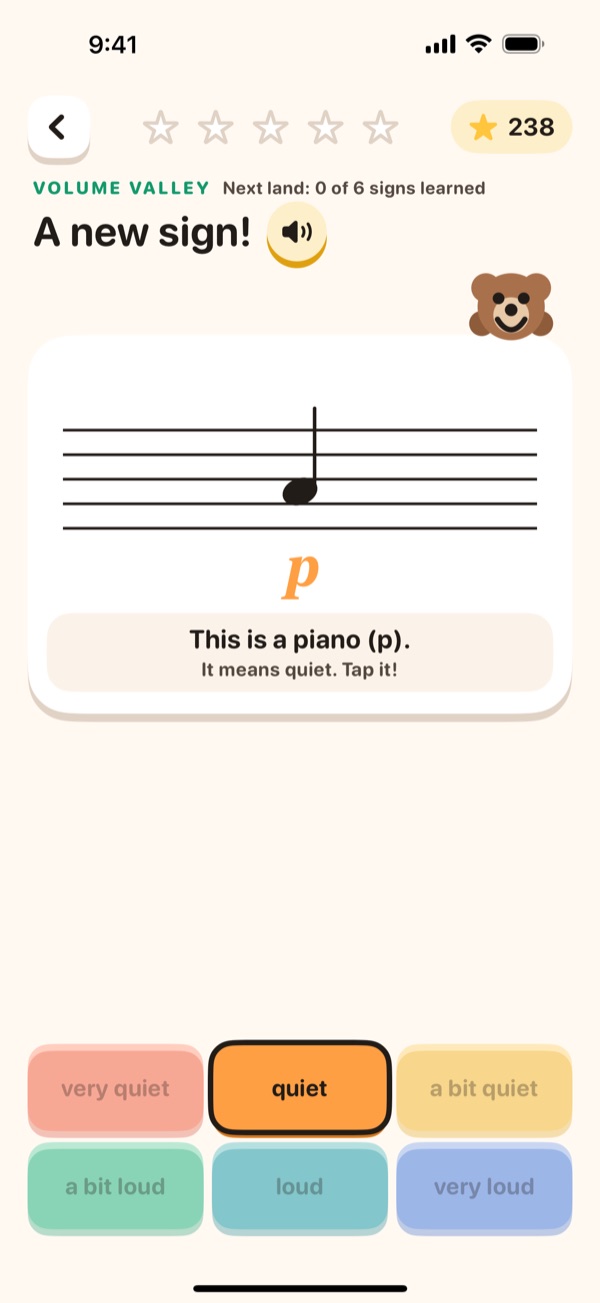
A sign on the card and its meaning to tap: note lengths, rests, dots and ties, time signatures, loud and quiet from pp to ff, getting louder or quieter, and tempo words from Adagio to Presto. Each answer plays what the sign means.
For families
Made the way Cub Climb is made.
Short sessions with an end
15 to 25 cards, then “Today’s climb is done”. Playing on is allowed; stopping is the default. Stars are never taken away.
A profile for every child
Each with their own name, buddy, age and instrument. Behind a parental gate, grown-ups see which notes are solid, due for review or still being learned.
$14.99 once, the whole family
Free to start. One purchase of $14.99 opens all the music for every child in the house. Nothing renews, there is nothing to cancel, and Family Sharing is on.
Nothing leaves the device
No account, no ads, no analytics, no microphone. Progress is saved on the device, and the cub’s voice and the instrument sounds work offline.
Is there a first lesson coming up?
A few minutes a day, a note at a time, on any instrument or none yet. Free to start, then $14.99 once — nothing renews.