Little and often: the spacing effect for parents
8 October 2026 · 4 min read
When something feels important, the instinct is to do a lot of it at once: a long Saturday session, a stack of worksheets the week before. Learning research points the other way. The same amount of practice, spread out, tends to be remembered longer.
What is the spacing effect?
Psychologists call it the spacing effect, or distributed practice. Studying something in several shorter sessions with gaps in between leads to better long-term memory than studying it in one block, even when the total time is the same.
How strong is the evidence?
- A 2006 review pulled together hundreds of experiments and found that spaced practice beat massed practice for remembering over time. It also found that the best gap depends on how long you need to remember something: the longer the goal, the longer the gaps can be. (Cepeda and colleagues)
- A 2013 review of ten common study techniques rated distributed practice as one of only two with “high” usefulness, because it works across ages, materials and settings. (Dunlosky and colleagues)
What it looks like at home
- Ten minutes, a few times a week rather than an hour on Sunday. Short sessions are also easier to stop while they’re still fun.
- Come back to the tricky ones. A puzzle or word that went wrong today is worth seeing again tomorrow, then a few days later, then next week.
- Mix it up. A word game one day, a number pattern the next, a jigsaw at the weekend. Here are 12 games to rotate.
- Skip the cram. If a school screening is coming up, a calm routine is kinder than a big push, and the research gives no reason to think the push works better.
How Cub Climb uses it
In Cub Climb, a puzzle your child missed comes back after 1 day, then 3 days, then 7 days. A very quick right answer on a hard puzzle is noted as a possible lucky guess rather than taken at face value. We suggest 10 to 20 minutes a few times a week, and there are no streaks to keep up.
A grown-up can also set a daily goal of a few puzzles, and an optional reminder that skips any day your child has already practised: little and often, built in. See how the app works.
Sources
- Cepeda, Pashler, Vul, Wixted & Rohrer (2006). Distributed practice in verbal recall tasks: A review and quantitative synthesis. Psychological Bulletin, 132(3)
- Dunlosky, Rawson, Marsh, Nathan & Willingham (2013). Improving students’ learning with effective learning techniques. Psychological Science in the Public Interest, 14(1)
From the makers of this blog
Cub Climb: reasoning puzzles that ask “why?”
- All three kinds of reasoning: words, numbers and shapes, nine puzzle types, 3,600+ original puzzles for grades 3 to 8.
- Answer, then say why. One star for the answer, a second for naming the rule, then the cub explains it in plain words.
- Missed puzzles come back after 1, 3 and 7 days, and a grown-ups’ area shows which skills are going well.
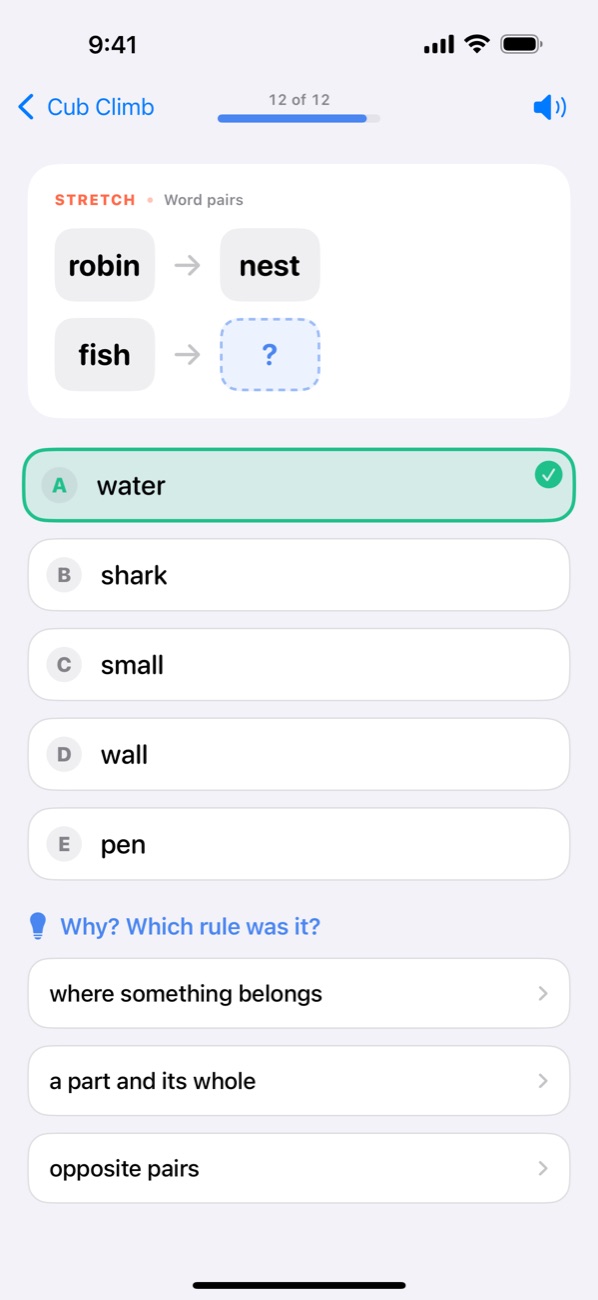
The first 20 puzzles are free. Then a season pass that never renews, or monthly. See how it works.
More from the blog
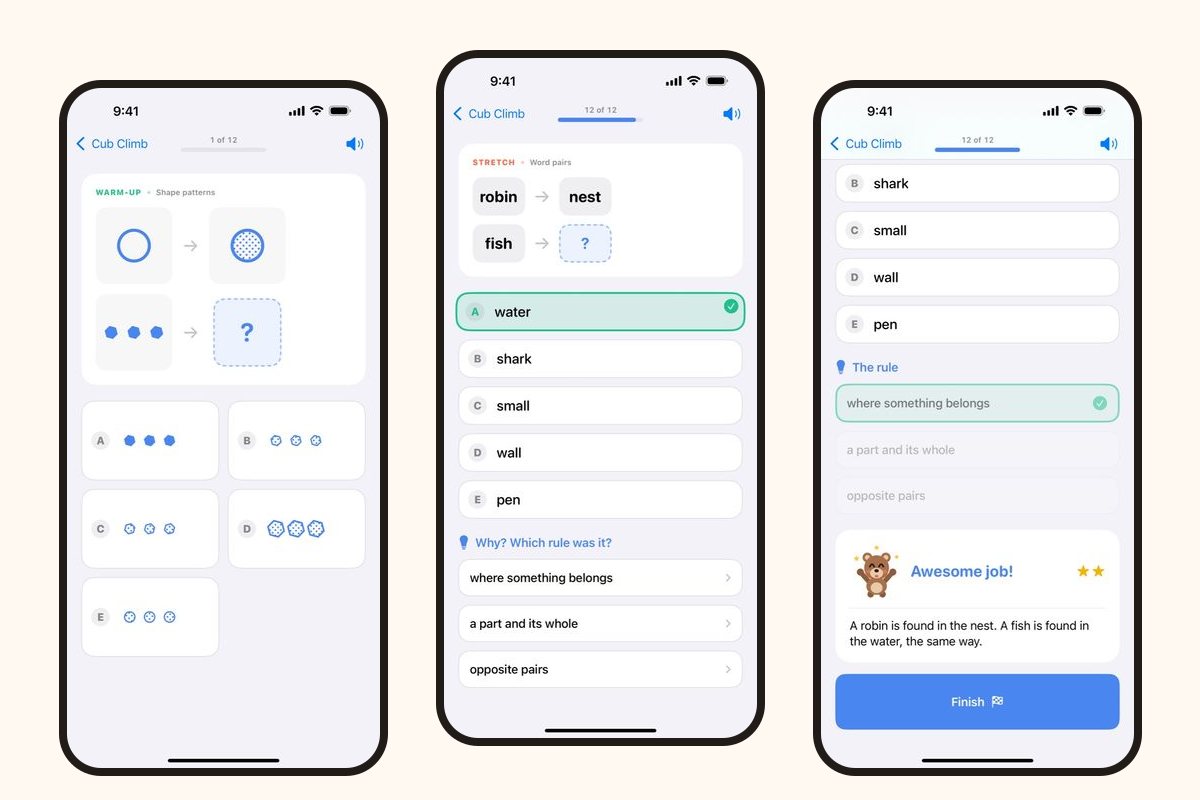 How Cub Climb builds reasoning, puzzle by puzzleA tour of the Cub Climb app on real screens: the three kinds of reasoning, answer-then-why, missed puzzles that come back, and what grown-ups see.
 York Region’s Grade 3 gifted screening, explainedWhen York Region screens Grade 3 students for gifted programs, what the CCAT looks at, and what happens after — from the board’s own published procedure.
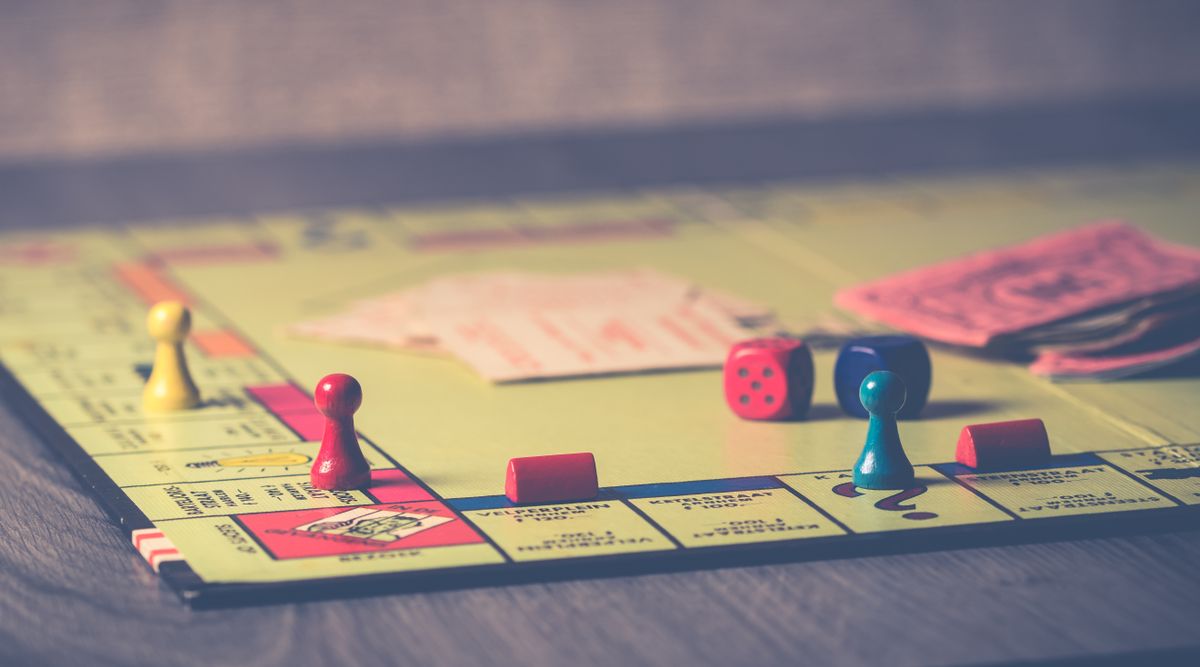 12 reasoning games to play at home this weekBoard games, word games and puzzles that build verbal, number and visual reasoning — including the ones a Toronto school board suggests to its own families.
Cub Climb is not affiliated with, endorsed by, or connected to any school board, test publisher or testing organisation. CCAT-7, CogAT, OLSAT and CAT4 are trademarks of their respective owners.