How Cub Climb builds reasoning, puzzle by puzzle
8 October 2026 · 6 min read
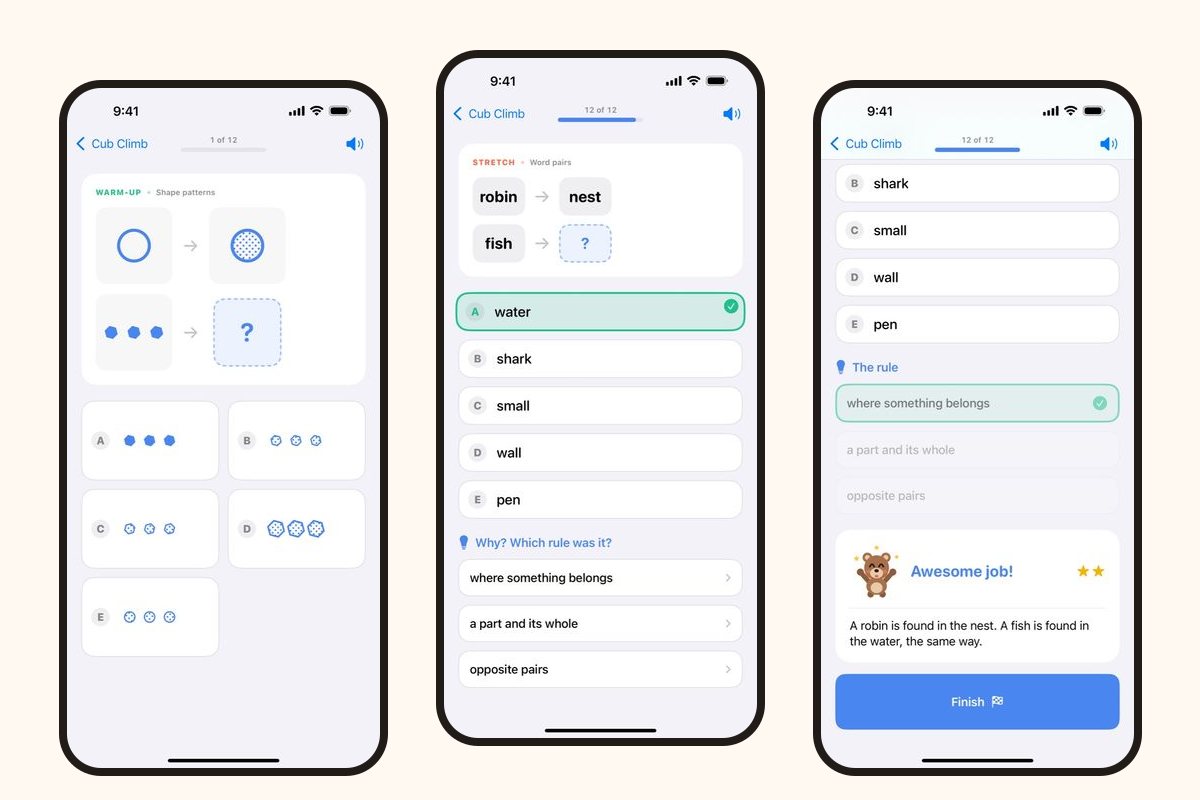
We built Cub Climb for parents who want their child to think more, not drill more. It’s a set of short reasoning puzzles for grades 3 to 8, in the three areas gifted screenings like the CCAT-7 and CogAT look at. What makes it different is one extra question after every answer: why? Here’s how it works, on the app’s real screens.
1. Words, numbers and shapes, all three
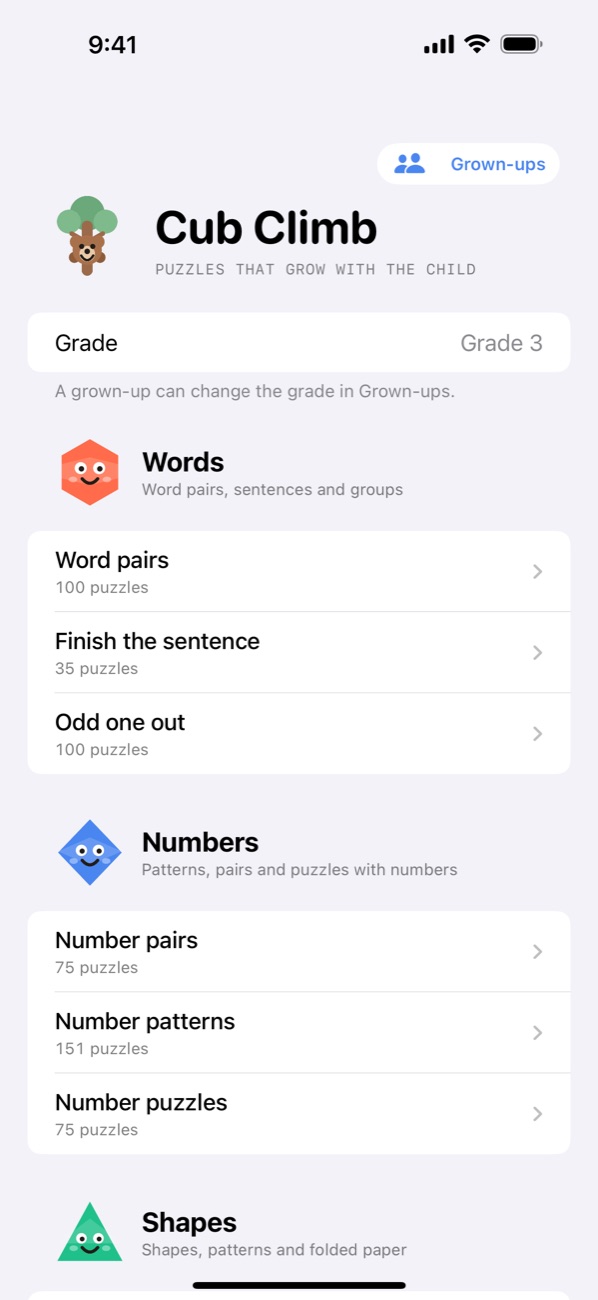
The home screen is the three kinds of reasoning, each with three kinds of puzzle: nine in all, with over 3,600 original puzzles behind them.
- Words: word pairs, finish the sentence, odd one out.
- Numbers: number pairs, number patterns, number puzzles.
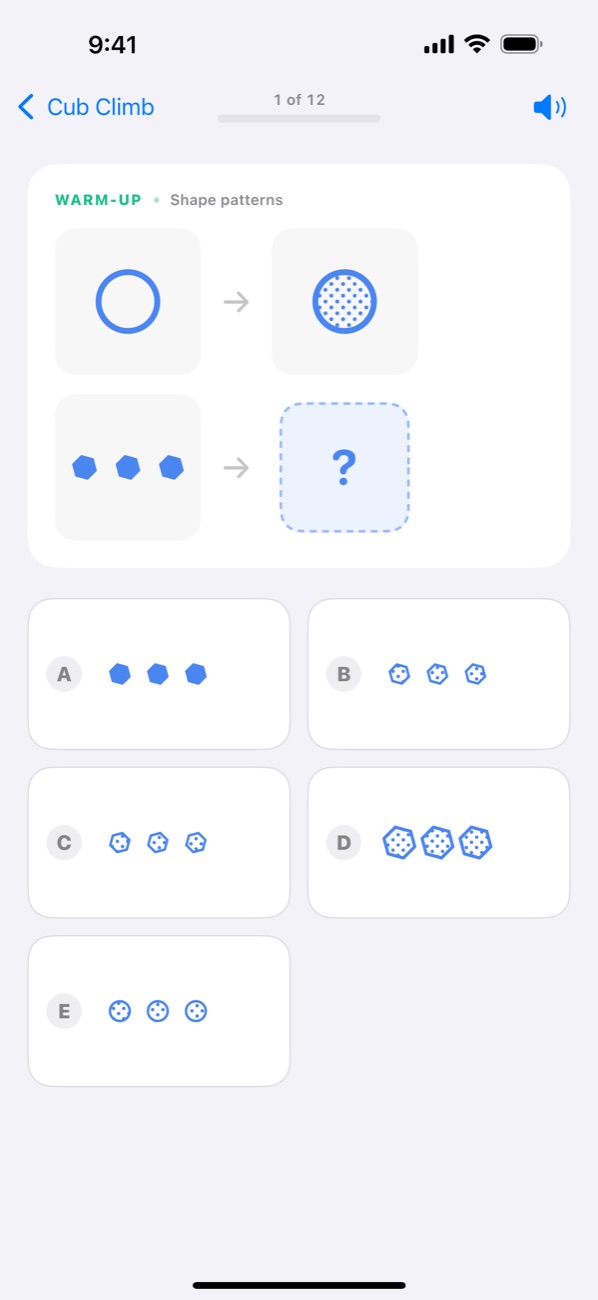
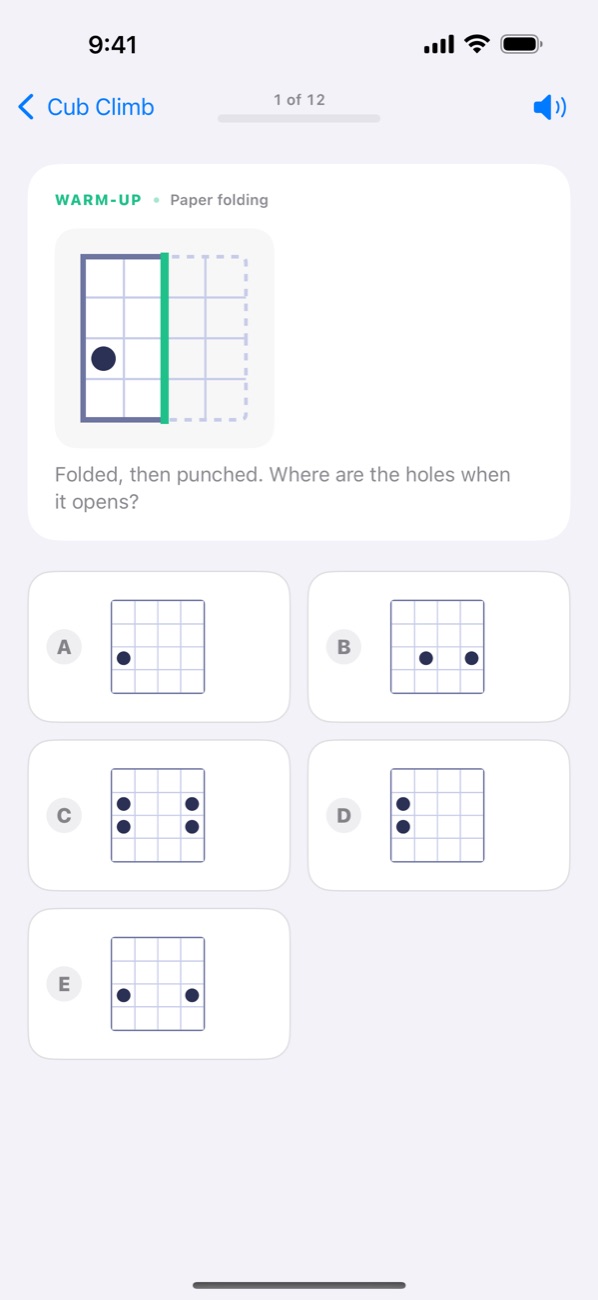
- Shapes: shape patterns, shape groups, paper folding.
- Plus Places: world flags, around the world and Canada, for fun. Geography isn’t on any screening.
These line up with what the screenings measure. What each kind of reasoning means.
2. Answer, then say why
Every reasoning puzzle has two steps. Your child picks an answer for the first star. Then the app asks “Why? Which rule was it?” and they choose the rule, like “where something belongs”, for the second. Then the cub explains it in a plain sentence.
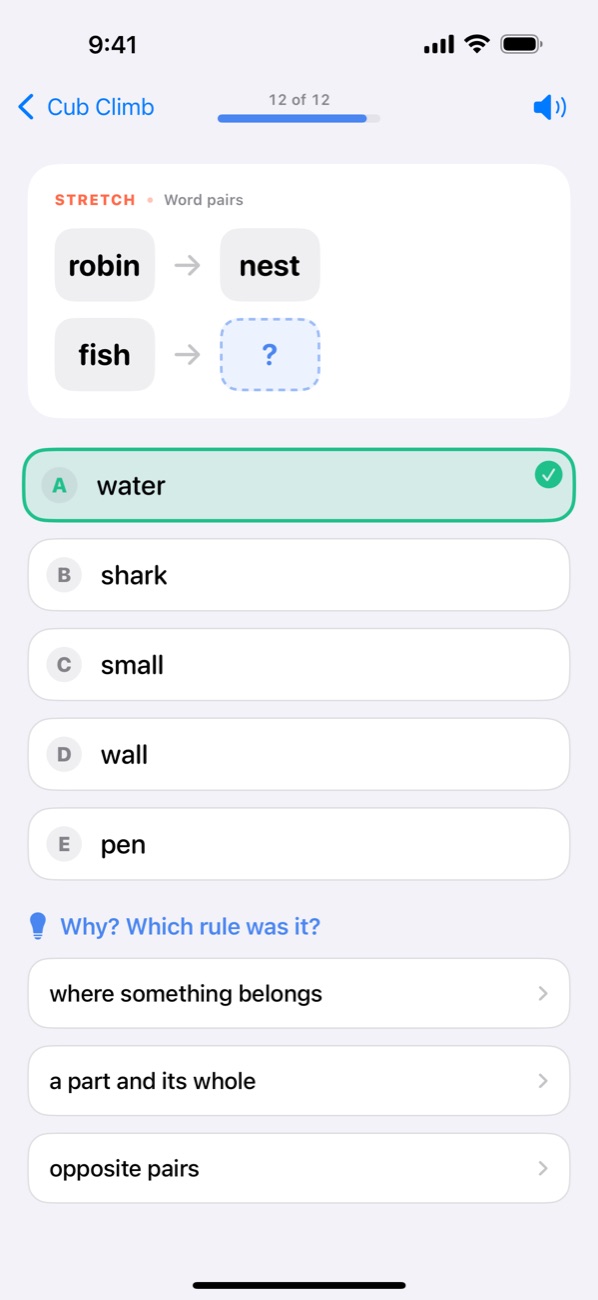
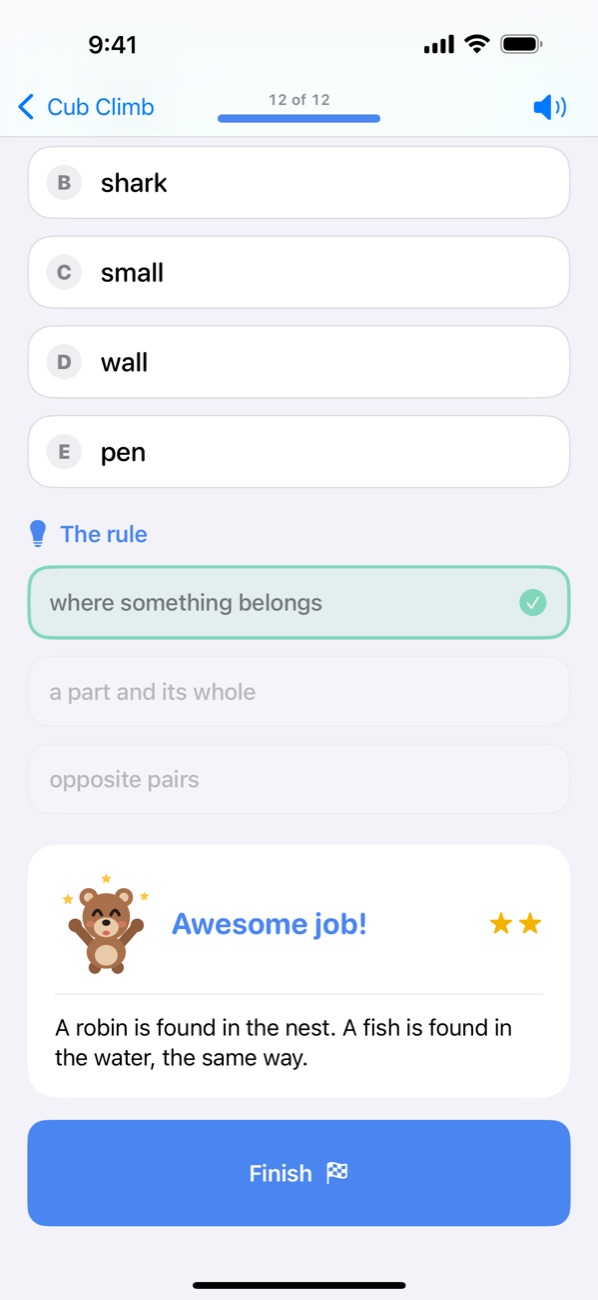
Naming the rule is the harder half, and it’s the half that shows a child understood rather than recognised. It’s also what Toronto’s board suggests families do at home: ask children to explain how they got an answer. There’s research behind it too: why asking “how do you know?” helps.
3. Picture puzzles, drawn fresh
Non-verbal puzzles are about looking closely. Cub Climb draws its shape patterns, shape groups and paper-folding puzzles on the device, so they stay sharp at any size, on iPhone or iPad.
4. A climb, not a race
- Twelve puzzles a climb, starting with warm-ups and building to stretch puzzles. The cub steps up the trail with each one.
- Nothing runs on a clock. No timers, no countdowns. Speed isn’t the point; thinking is.
- The cub reads aloud, for children still growing as readers. A grown-up can turn the voice off.
- Missed puzzles come back after 1 day, 3 days and 7 days, at the front of the next climb. Why spacing works.
5. What grown-ups see
Behind a parental gate (and Face ID or Touch ID, once you’ve opened it once) there’s a calm view of how practice is going:
- Every skill, marked “Going well” or “Worth more practice”, with how often your child named the rule.
- This week: puzzles done, days practised and minutes, plus how many puzzles are due for another go.
- Quick guesses: wrong answers given in under four seconds, a gentle sign to encourage a slower look.
- A daily goal your child sees counting up, and an optional reminder that skips days they’ve already practised. It’s the only notification the app sends.
- A test date only you see. Your child never sees a countdown.
6. Pay once for the season
The first 20 puzzles are free, with no account. After that, a CAD 69.99 season pass that is paid once and never renews, or CAD 19.99 a month, cancelled any time through Apple. Family Sharing is on, and there are no ads.
Try the first 20 puzzles free
On iPhone and iPad. Or play some in your browser first.
Questions parents ask
What makes Cub Climb different?
It builds the thinking behind the questions. Every puzzle is original, written for the app, across the three kinds of reasoning — verbal, quantitative and non-verbal — that screenings like the CCAT-7 and CogAT look at. After each answer, your child names the rule, the habit Toronto’s board suggests families build at home.
How will I know how my child is doing?
The grown-ups’ area shows every skill as “Going well” or “Worth more practice”, how often your child named the rule, and which puzzles are due for another go. It’s built around skills, so you always know what to practise next.
What ages is it for?
Grades 3 to 8. A grown-up sets the grade, and puzzles are drawn from that grade and the one below, easiest first.
How much does it cost?
The first 20 puzzles are free, with no account. After that it’s a CAD 69.99 season pass that never renews, or CAD 19.99 a month, cancelled through Apple. Family Sharing is on.
Is there advertising or tracking?
No ads and no tracking. A child’s name is optional, set by a grown-up, and stays on the device.
More from the blog
 York Region’s Grade 3 gifted screening, explainedWhen York Region screens Grade 3 students for gifted programs, what the CCAT looks at, and what happens after — from the board’s own published procedure.
 12 reasoning games to play at home this weekBoard games, word games and puzzles that build verbal, number and visual reasoning — including the ones a Toronto school board suggests to its own families.
 Verbal, quantitative and non-verbal reasoning, explainedThe three kinds of reasoning gifted screenings like the CCAT-7 and CogAT look at, in plain words, with one puzzle of each to try with your child.
Cub Climb is not affiliated with, endorsed by, or connected to any school board, test publisher or testing organisation. CCAT-7, CogAT, OLSAT and CAT4 are trademarks of their respective owners.