How to help with the weekly spelling test: what the research says
7 November 2026 · 6 min read
The list comes home on Monday, the test is on Friday, and the usual plan is to go over it on Thursday night. The research on how children learn spellings points to a different week, and it isn’t more work. It is the same ten minutes, used differently.
Is a weekly spelling list worth practising?
Yes. A 2014 review pulled together 53 experiments with over 6,000 students: being taught spelling beat not being taught it, the gains lasted, and they showed up in children’s own writing and even their reading. Practice at home is part of that teaching. (Graham and Santangelo)
1. Write it from memory, don’t copy it
Copying a word out five times, or in rainbow colours, feels productive. In three classroom experiments with second graders, hearing a word, writing it from memory and then checking it beat rainbow writing every time. In one, children gained 34% against 9%, and the difference was still there five weeks later. (Jones and colleagues)
2. Check each word straight away
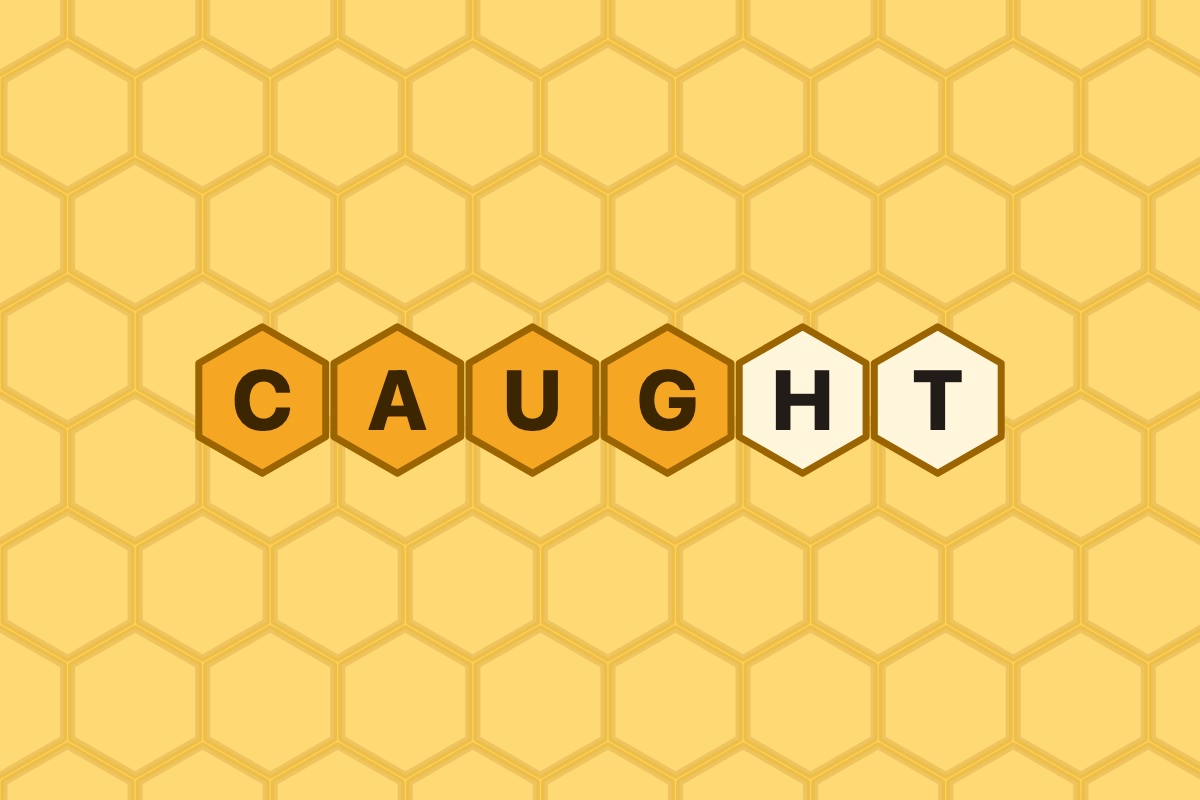
A child who writes “cuaght” will usually read it back as “caught”. A 2026 study of 318 primary pupils found that children recognise their right spellings well but catch few of their mistakes, and fix only some of the ones they do spot. (IPN Kiel) So the checking is the grown-up’s job, and it works best word by word, not at the end of the list.
- Show the right spelling next to theirs, and point to the letters that differ.
- Have them write it again, right, before the next word.
- Say what was right, too: “c, a, u, g, h, t: just the a and u swapped.”
3. A little each day beats Thursday night
Third graders who practised spelling words and maths facts spread over several sessions scored 70%, against 53% for the same practice in one block. (Rea and Modigliani, described by Willingham) Children don’t choose to spread practice on their own, so it helps to make it the plan:
- Monday: a quick check. Test the whole list cold. The words they already know need only a glance for the rest of the week.
- Tuesday and Wednesday: a few words a day, the ones they missed, and yesterday’s misses again.
- Thursday: a dress rehearsal, the whole list, no help, like the test.
Typing or handwriting?
For learning a spelling, it doesn’t seem to matter. Canadian second graders learned new words as well by typing as by printing them. (Ouellette and Tims) Handwriting matters for other reasons, so the test on paper is still worth a rehearsal, but practice on a keyboard counts. A keyboard with autocorrect doesn’t: it spells the word for them.
The tricky letters
For words with letters you can’t hear, like Wednesday, February or caught, try saying the word the way it’s spelled: “Wed-nes-day”, “c-augh-t”. It gives the silent letters a sound to hang on. Lists built around one pattern, like augh and ough in grade 3, make this easier: learn the chunk once, and it spells the whole list.
How Spell Cub does it
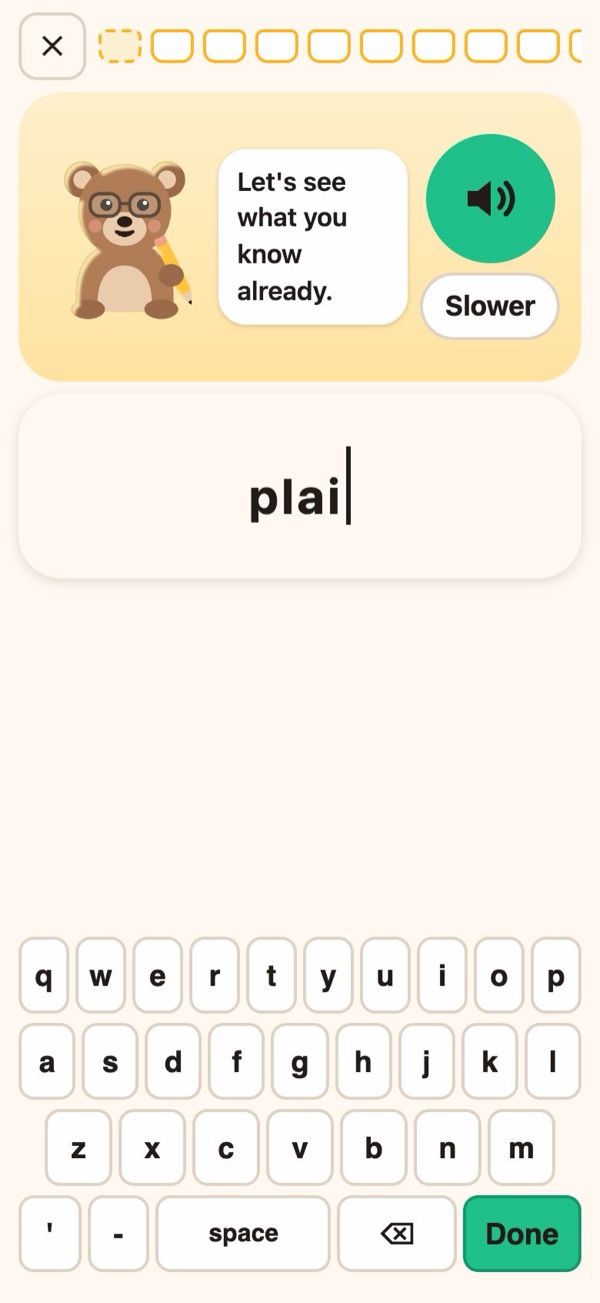
We built Spell Cub to run exactly this week for you. The cub says the word, a sentence and the word again; your child spells it from memory on a keyboard with no autocorrect; a miss is fixed on the spot, letter by letter. It knows the test day, so Monday is the check, new words are spread over the days left, and the last session is a rehearsal with no help. One parent shares the class’s list, and it’s free for every child.
Sources
- Jones, Wardlow, Pan, Zepeda, Heyman, Dunlosky & Rickard (2016). Beyond the rainbow: retrieval practice leads to better spelling than does rainbow writing. Educational Psychology Review, 28 (described by The Learning Scientists)
- Willingham (2002). Allocating student study time: “massed” versus “distributed” practice. American Educator (describing Rea & Modigliani, 1985)
- IPN Kiel (2026). Children’s metacognitive awareness and self-correction of their own spelling mistakes (abstract)
- Ouellette & Tims (2014). The write way to spell: printing vs. typing effects on orthographic learning. Frontiers in Psychology, 5:117
- Graham & Santangelo (2014). Does spelling instruction make students better spellers, readers, and writers? A meta-analytic review. Reading and Writing, 27 (figures as reported by Emina McLean)
From the makers of this blog
Spell Cub — this week’s spelling list, out loud, free for the whole class
- One link for the class. One parent or teacher pastes the list; everyone else taps the link and practises, with no sign-up and nothing to install.
- Hear it, spell it, fix it. The word in a sentence, spelled from memory, and a miss fixed straight away.
- Planned around test day, a little each day, with a rehearsal before the test. Grades 1 to 5.
Free for every child, with no ads and nothing to buy. See how it works.
More from the blog
 Meet Spell Cub: one link for the whole class’s spelling listCub Climb’s third app is free for every child: one parent pastes the weekly spelling list, everyone practises it out loud by test day. Why we built it.
- Spelling
 How many spelling words a week? What grades 1 to 5 learnFrom about 5 to 12 words a week in grade 1 to around 20 in grade 5, and from sounds to word parts. What the curricula ask, and free lists for each grade.
- Spelling
- United States
- Canada
 Gifted test prep: boards say don’t, sellers say you must. The evidence?Toronto's board says never prepare; prep sites sell practice tests. A 2025 meta-analysis of 28 studies found modest gains and little from sample items.
- Gifted testing
- How children learn
- Canada
Cub Climb is not affiliated with, endorsed by, or connected to any school board, test publisher or testing organisation. CogAT, NNAT, OLSAT, CCAT-7, CAT4 and other test names are trademarks of their respective owners.