Boards say don’t prep. Sellers say you must. The evidence?
18 October 2026 · 6 min read
Also in: English · Español · Français
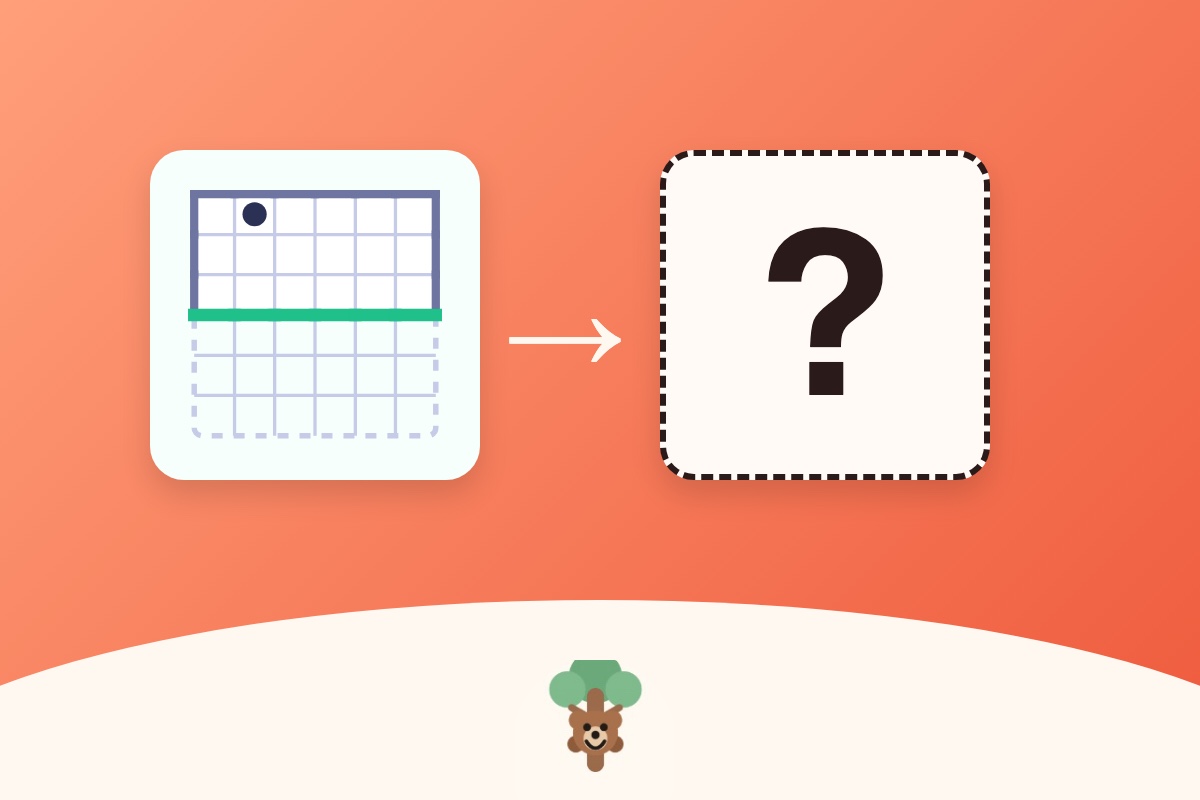
Two loud voices tell parents what to do before a gifted test. One is a school board: don’t prepare at all. The other is a shelf of workbooks and websites: practise now, or your child starts behind. Both sound certain. The research is messier than either, and more useful.
What one large board says
Toronto’s board, the TDSB, says in plain terms that no advance preparation or practice is permitted for its cognitive screening. Its Special Education Plan goes further: if the board decides a child practised, or had already seen similar items, testing stops and the results are not shared or considered. The reason it gives is that tests of this kind are meant to measure problem solving with tasks that are new to the child.
That is one board’s rule, and we have its wording in full. Other boards and districts set their own, so ask yours, in writing, before you buy anything.
What the sellers imply
Many prep products are built around practice tests and sample items, and the pitch usually leaves the impression that the score will rise. No honest seller can promise that. A result depends on the day, the test and who your child is compared with, and a score is not a placement either: what a gifted test score means, and what it doesn’t.
What the research found
In 2025, researchers pooled 28 experimental and quasi-experimental studies of what test preparation does to students’ results on large-scale educational tests. What they reported:
- Preparation helped, modestly. The overall effect was g = 0.26, with a 95% confidence interval of 0.10 to 0.42 — about a quarter of a standard deviation. On the CogAT’s scale, where the standard deviation is 16 points, a quarter would be roughly four points. That is only to give a feel for the size: the studies were not about the CogAT.
- The size of the gain depended on how children prepared. Using workbooks, building students’ socio-affective strategies (how they feel about and handle the test), and teaching test-taking skills were each found to be significant moderators of the effect.
- Sample items and practice tests showed little. The authors found little evidence of a practice effect from using them.
The caveats matter. These were large-scale tests of school learning, not gifted screeners. The authors note that the usual explanation for gains rests mostly on retest effects on cognitive ability tests, and that more evidence is needed. And a gain from being familiar with a test is not the same thing as a child who thinks better, which is our reading rather than the paper’s.
So who is overselling?
The board’s rule is a policy about fairness and about what the test is for. It is not a prediction that practice does nothing. The seller’s promise is a prediction, and for sample items and practice tests the 2025 pooled evidence doesn’t back it. If you are choosing how to spend a child’s time, that points away from drilling items.
What a parent can do instead
- Find your board’s rule first. If it bars practice or similar items, you want to know before, not after.
- Skip drilling sample items. The evidence for them is thin, and where a board bars similar items, they are the thing most likely to cost you.
- Play the games a board itself suggests. TDSB’s own list for parents includes Boggle, Scrabble, Uno, Yahtzee, jigsaws and planning a trip with a map. 12 reasoning games to play this week.
- Ask “how do you know?” Explaining a rule is different from being right once. What the research says about self-explanation.
- Keep it short and regular. Ten minutes a few times a week, not a weekend push. The spacing effect for parents.
- Mind the nerves. The review flagged how children feel about and handle tests as one of the things the gain depended on. A calm child on test day is not a trick.
Where we stand
We make Cub Climb: Gifted Test Prep, and its name says “test prep”, so weigh this post accordingly. Here is what the name does and doesn’t mean. Every puzzle is original and written by us, and we have never seen a real test form. Nothing in the app predicts a score or promises a placement, and nothing we make can change a stage of a school’s process that is rated by teachers. We are not affiliated with any school board or test publisher.
What it does is the thing this post keeps coming back to: a child answers a puzzle, then names the rule behind it. See how it works. We haven’t put Cub Climb through a study, and the research above is about test preparation in general, not about our app.
Sources
- Hao, Baird, El Masri & Double (2025). The Impact of Test Preparation on Performance of Large-Scale Educational Tests: A Meta-analysis of Experimental Studies. Review of Educational Research
- TDSB — Universal Screening (public parent page)
- TDSB — Amendments to the 2026-2027 Special Education Plan (PDF)
- TDSB Ward 13, Universal Screening and Gifted Programming, ward forum deck, 24 November 2022 (PDF)
From the makers of this blog
Cub Climb: Gifted Test Prep — reasoning puzzles that ask “why?”
- All three kinds of reasoning: words, numbers and shapes, nine puzzle types, 3,600+ original puzzles for ages 8 to 14 (grades 3 to 8).
- Answer, then say why. One star for the answer, a second for naming the rule, then the cub explains it in plain words.
- Puzzles follow your child, missed ones come back after 1, 3, 8, 20 and 50 days, and up to four children can each have their own climb.
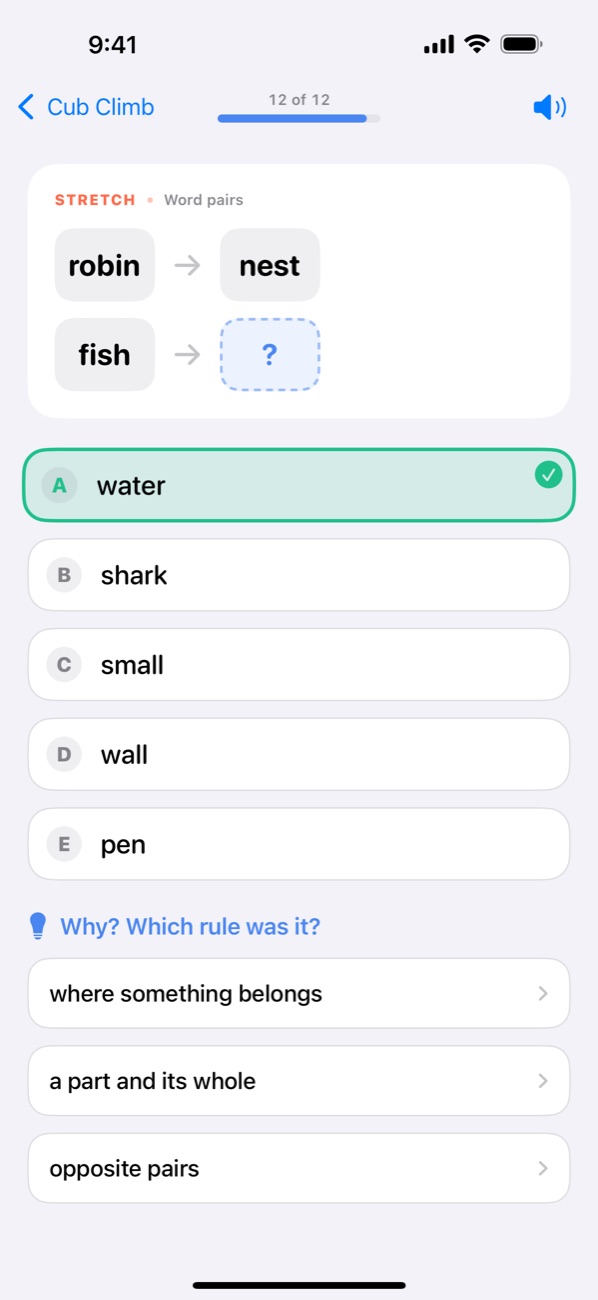
The first 20 puzzles are free. Then a season pass that never renews, or a monthly plan. See how it works.
 Android: coming soon
More from the blog
 What a gifted test score means — and what it doesn’tStandard age scores, percentiles and stanines in plain words, why two children with the same score can differ, and what to ask your school.
- Gifted testing
- How children learn
 York Region’s Grade 3 gifted screening, explainedWhen York Region screens Grade 3 students for gifted programs, what the CCAT looks at, and what happens after — from the board’s own published procedure.
- Gifted testing
- Canada
 No app can teach music. Here’s the one thing a good one canMusic is more than reading notes. What an app can't do, the one skill it can build, and six questions to ask before you download any music app.
- Reading music
- How children learn
Cub Climb is not affiliated with, endorsed by, or connected to any school board, test publisher or testing organisation. CogAT, NNAT, OLSAT, CCAT-7, CAT4 and other test names are trademarks of their respective owners.