Five-minute note-reading games to play at home
11 October 2026 · 5 min read
- Music at home
- Reading music
“Practise reading your notes” is a common line in a beginner’s notebook — and a hard one to act on. These six games take five minutes each, need paper, a pen and maybe a few coins, and work even if you don’t read music yourself. Keep a list of the notes your child is learning beside you.
Six games
- Staff on the floor. Lay five strips of tape or string on the floor as the staff. Call a note; your child jumps onto its line or space. Then swap: they jump, you name it.
- Coin notes. Draw a big staff on paper. Put a coin on a line or space; your child names it. Five right in a row and the coins are theirs to place for you.
- Step up, step down. Point to a note, then say “step up” or “skip down”. Your child names where you land. This builds the idea that a step on the staff is a step in the alphabet.
- Note of the day. Pick one note at breakfast. Every time someone says its letter during the day, your child has to point to where it sits.
- Play it, then name it. On their own instrument, your child plays a note from their book and names it — or names it first, then plays it to check. Hearing it is half the learning.
- Teach the grown-up. Your child picks three notes and teaches them to you, then quizzes you tomorrow. Explaining is some of the best practice there is.
Why short games work
Two of the most reliable findings in learning research meet here. Recalling an answer — naming a note before being told — builds memory far more than looking at it again. And the same practice spread over many days is remembered much longer than the same practice in one sitting. Five minutes a day, on the notes from this week’s lesson, is enough.
On the days you can’t play
Cub Climb Melody runs the same kind of practice on its own: a note on the staff, your child names it, and it plays on their own instrument. Notes come back just before they would be forgotten, and a session ends after a few minutes. See how Melody works · which notes to start with.
Sources
From the makers of this blog
Cub Climb Melody — a child learns to read music, one note at a time
- A note, its name, its sound. A note sits on the staff, your child taps its name, and it plays on their own instrument — piano, violin, cello, guitar, recorder and more.
- Help that fades. Each note starts in its colour and fades to plain ink as it is learned, so a child is really reading.
- Notes come back just before they would be forgotten. For ages 3 and up, with everything spoken for the youngest.
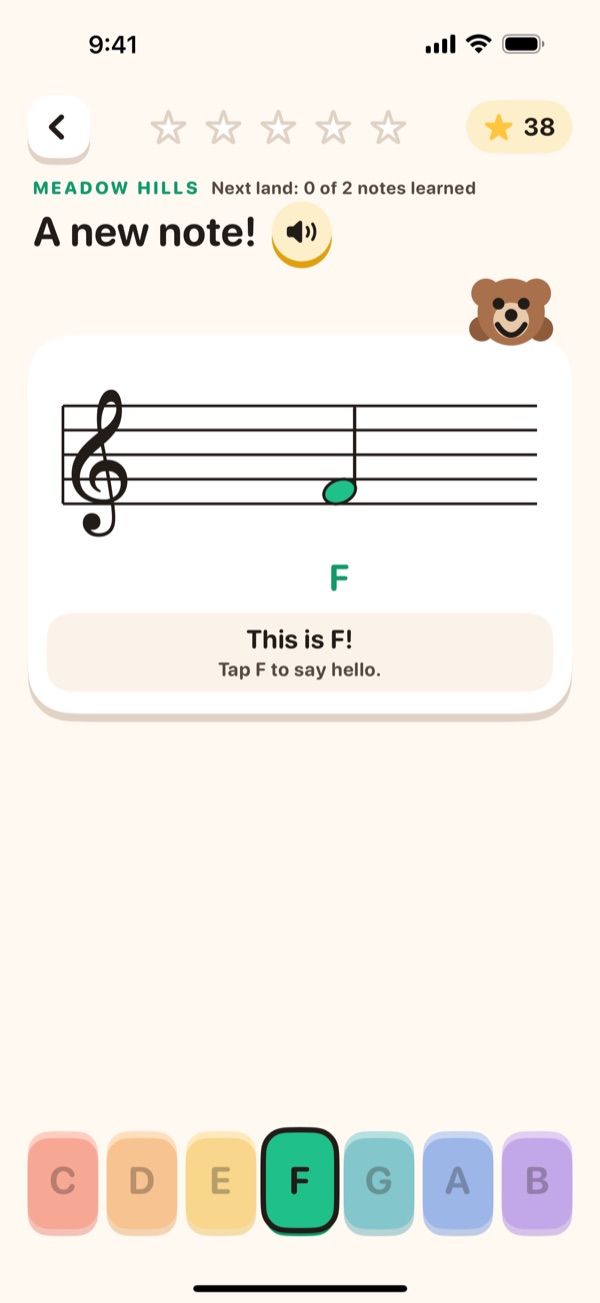
Free to start, then one purchase for the whole family, with nothing to renew. See how it works.
More from the blog
 How to teach a child to read music, ages 3 to 8What children can learn when, why sound comes before symbols, and a calm, five-minute way to start reading notes at home — even if you don't read music.
- Reading music
- How children learn
 Treble or bass clef first? It depends on the instrumentWhich clef your child reads first, and which notes, depends on what they play. A guide for piano, violin, viola, cello, guitar, recorder and more.
- Reading music
 Do-Re-Mi or C-D-E? Letter names, fixed do and movable doWhy some teachers say C and others say Do, the difference between fixed and movable do, and which one helps your child read music.
- Reading music
- How children learn
Cub Climb is not affiliated with, endorsed by, or connected to any school board, test publisher or testing organisation. CogAT, NNAT, OLSAT, CCAT-7, CAT4 and other test names are trademarks of their respective owners.