How to teach a child to read music, ages 3 to 8
11 October 2026 · 6 min read
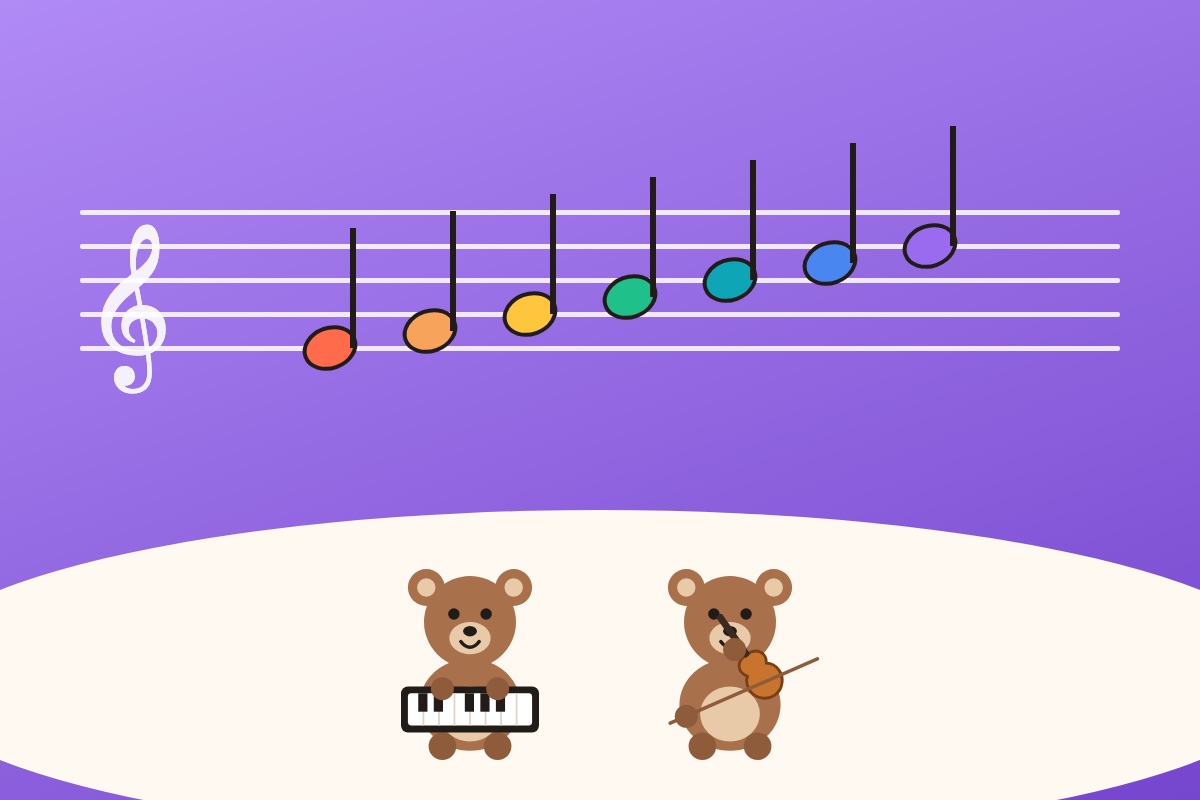
A page of music can look like a wall of dots. But reading it comes down to one small skill, repeated: look at a note, know its name, and know how it sounds. That is learnable at almost any age, in a few minutes a day — and you don’t need to read music yourself to help.
When can a child start?
Earlier than most people think. In one small study, 3- and 4-year-olds learned to read and play from standard notation over twenty ten-minute sessions, and the researcher concluded that children that age both manage it and enjoy it. What changes with age isn’t whether a child can learn, but how: the youngest need it short, spoken and playful; older children can take written hints and longer sessions.
Sound before symbol
The best-known ways of teaching children music — Kodály, Orff, Suzuki and Edwin Gordon’s Music Learning Theory — share one principle: sound before sight. Hear it, sing it, play with it, and only then read it, the way children learn language. Gordon called the inner hearing of music “audiation” — knowing how a note will sound before it is played. For a beginner, that means every note they learn to read should also be heard, every time.
A simple order to follow
- Start with the notes of their first lessons. For a pianist, that is usually Middle C and its neighbours; for a violinist, the open strings. Which clef and which notes, by instrument.
- Two or three notes at a time. Add a new one only when the last ones come easily.
- Lines and spaces, step by step. A note one step up the staff is one letter up the alphabet — the single most useful idea in note reading.
- Little and often. Five minutes a day beats half an hour on Saturday: practice spread out is remembered far longer than practice crammed together.
How Cub Climb Melody does it
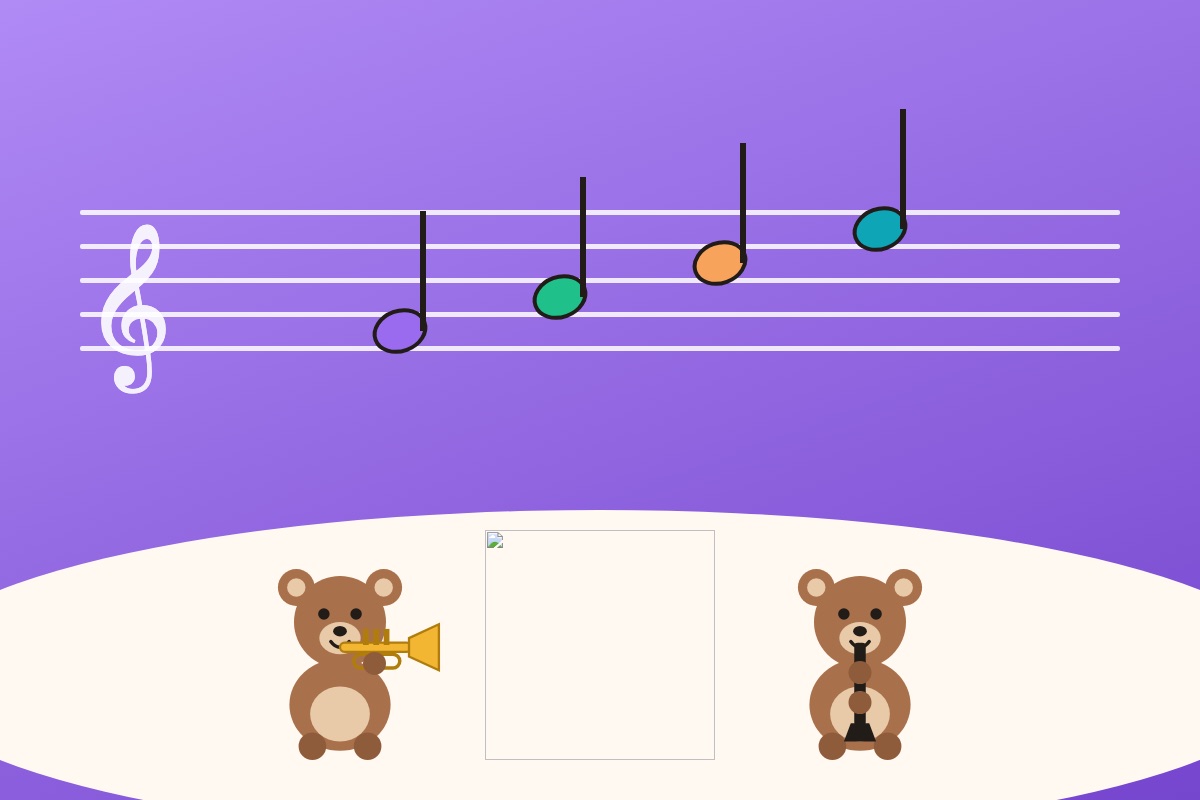
Melody puts one note on the staff and asks your child to tap its name; a right answer plays it on their own instrument. Each new note starts in a colour that matches its button, then the colour fades as the note is learned, so by the end your child is reading, not matching colours. Notes come back for review just before they would be forgotten, and a session ends after a few minutes. For ages 3 to 5, the cub speaks every question. See how Melody works.
Sources
- Bangor University PhD thesis (2001): Teaching pre-school children to perform from conventional music notation — an exploration of different methods
- College Music Symposium, vol. 31: Music Learning Theory in collegiate music education (Gordon’s audiation)
- AP School of Arts, Antwerp — Audiation-based learning (sound before sight)
- Cepeda, Pashler, Vul, Wixted & Rohrer (2006). Distributed practice in verbal recall tasks. Psychological Bulletin, 132(3)
From the makers of this blog
Cub Climb Melody — a child learns to read music, one note at a time
- A note, its name, its sound. A note sits on the staff, your child taps its name, and it plays on their own instrument — piano, violin, cello, guitar, recorder and more.
- Help that fades. Each note starts in its colour and fades to plain ink as it is learned, so a child is really reading.
- Notes come back just before they would be forgotten. For ages 3 and up, with everything spoken for the youngest.
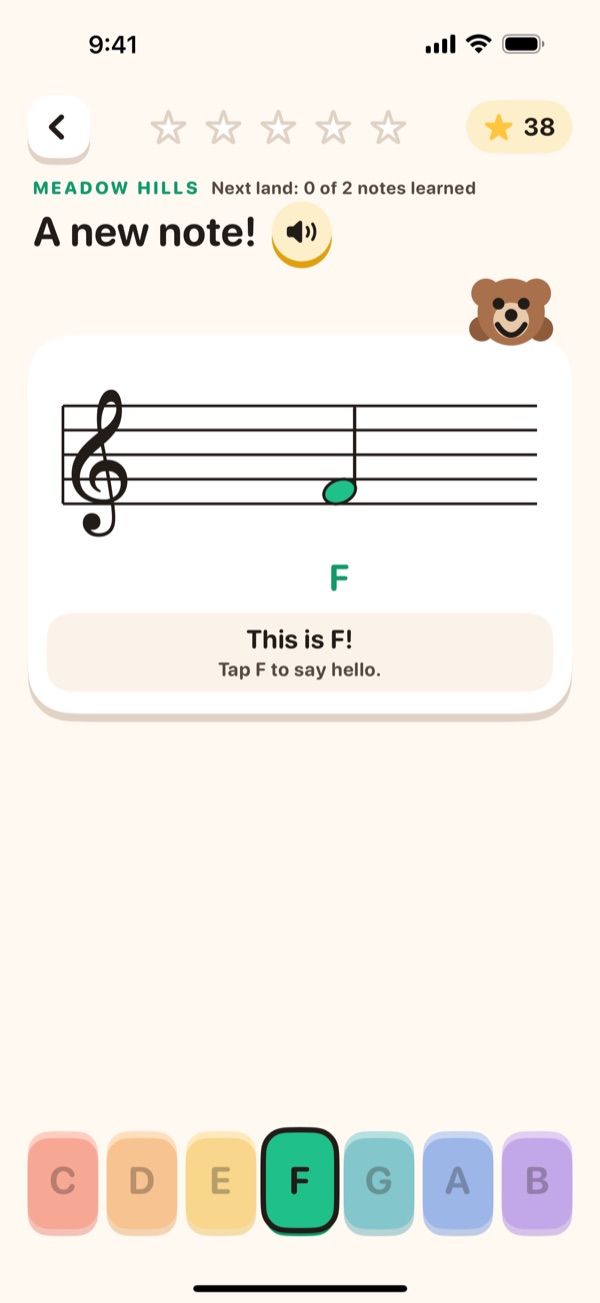
Free to start, then one purchase for the whole family, with nothing to renew. See how it works.
More from the blog
 Do-Re-Mi or C-D-E? Letter names, fixed do and movable doWhy some teachers say C and others say Do, the difference between fixed and movable do, and which one helps your child read music.
- Reading music
- How children learn
 Treble or bass clef first? It depends on the instrumentWhich clef your child reads first, and which notes, depends on what they play. A guide for piano, violin, viola, cello, guitar, recorder and more.
- Reading music
 Five-minute note-reading games to play at homeSix short games that help a child read notes on the staff, with paper, a few coins or their own instrument — no music reading needed from you.
- Music at home
- Reading music
Cub Climb is not affiliated with, endorsed by, or connected to any school board, test publisher or testing organisation. CogAT, NNAT, OLSAT, CCAT-7, CAT4 and other test names are trademarks of their respective owners.