The 11+, explained: verbal and non-verbal reasoning
11 October 2026 · 6 min read
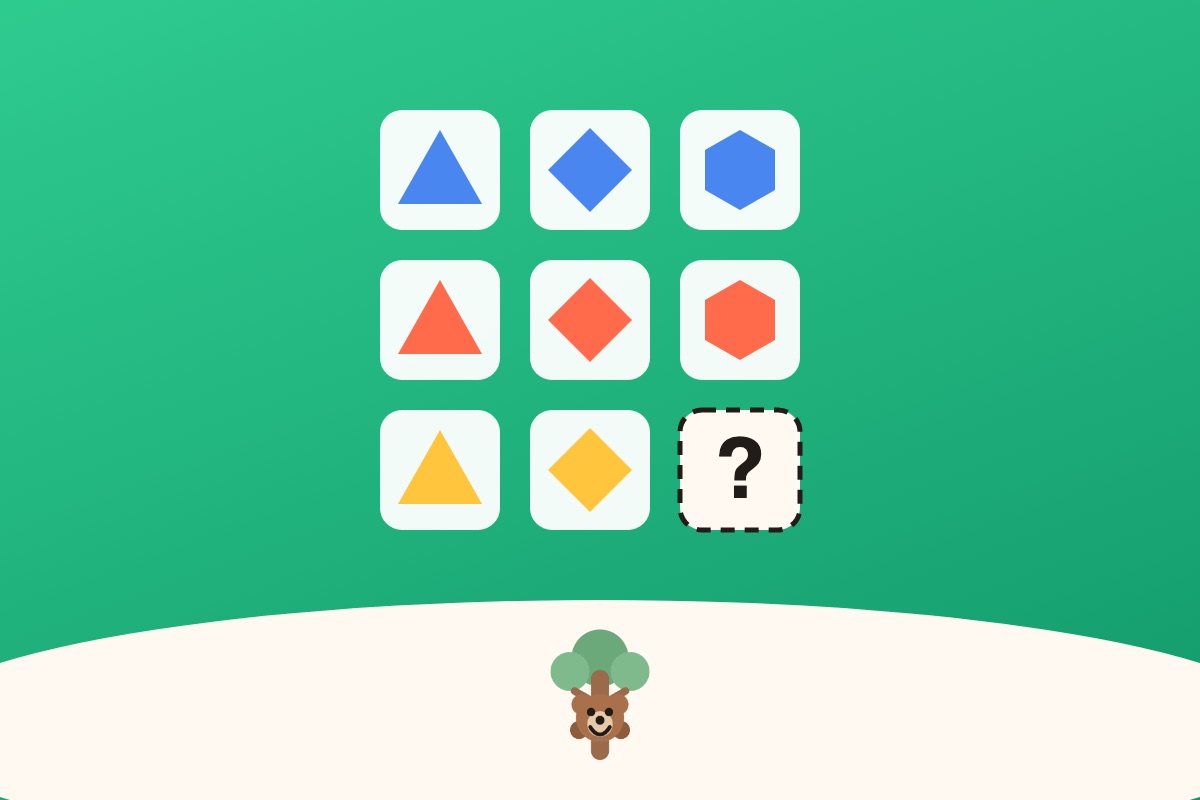
In the parts of England that still have grammar schools, the 11+ decides who is offered a place. Children sit it at the start of Year 6, around age 10, for a place in Year 7. Much of it is reasoning — and reasoning is something a child can grow, calmly, well before the day.
What is on the 11+?
There is no single 11+. Each area or school chooses its papers, its timings and its dates. GL Assessment, which writes most areas’ papers, says most include a verbal reasoning test, and many a non-verbal reasoning test. Many areas add English and maths.
Verbal and non-verbal reasoning, in plain words
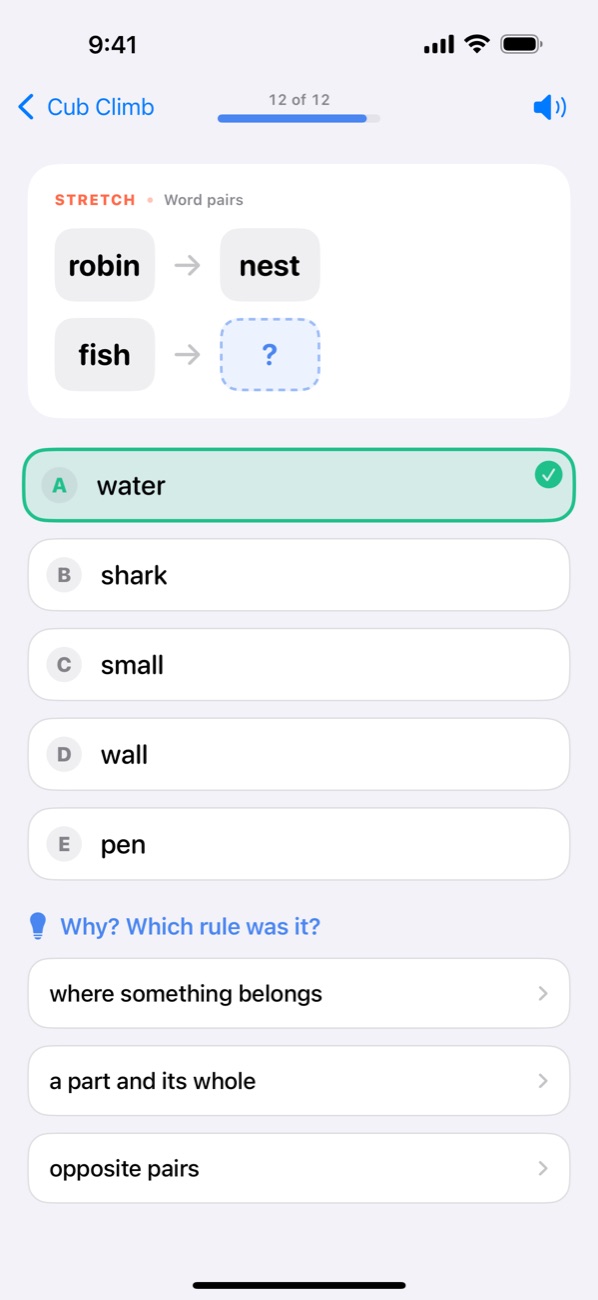
- Verbal reasoning is thinking with words: spotting how two words are linked, which word doesn’t belong, or what comes next in a pattern of letters or numbers.
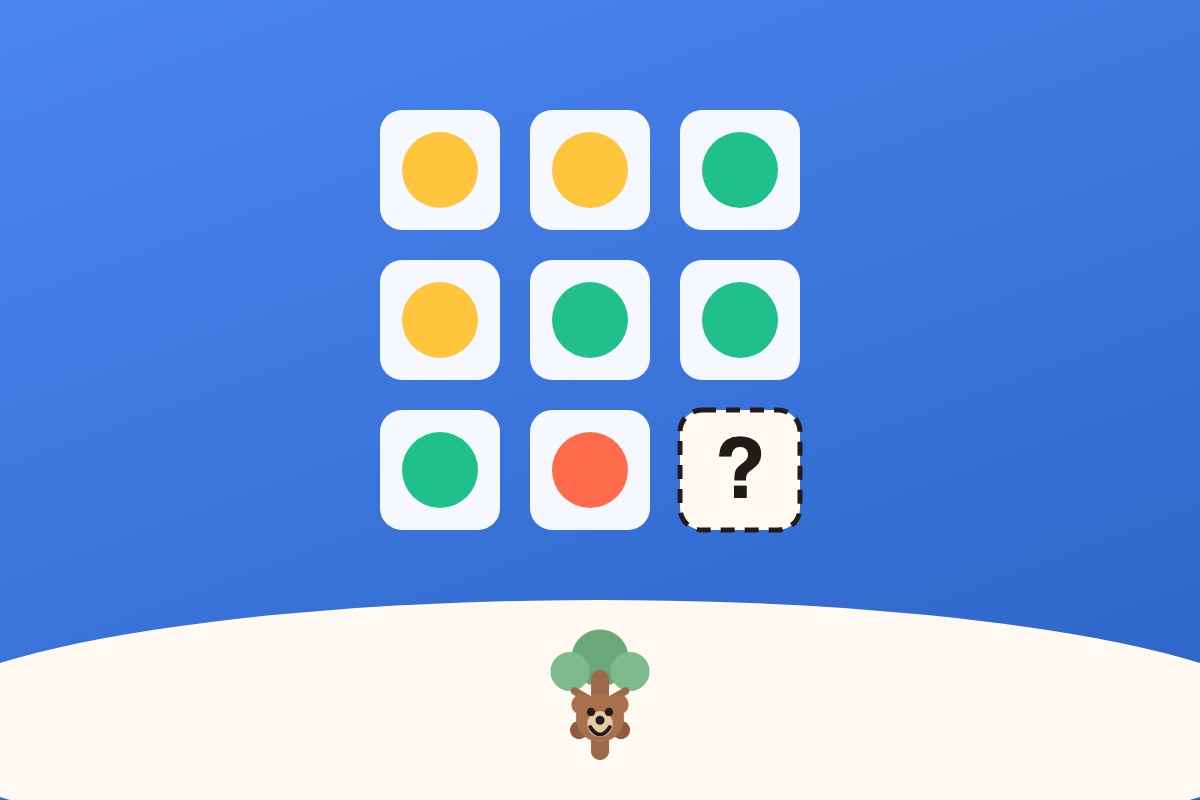
- Non-verbal reasoning is the same thinking with shapes: which shape completes a pattern, which is the odd one out, what a folded and punched sheet looks like when it opens.
Some 11+ verbal reasoning questions are word puzzles of their own kind — codes and hidden words — that are worth meeting once or twice before the test so they aren’t a surprise.
When to start
Registration usually closes months before the test, so look up your area’s admissions page during Year 5. For the skills, little and often from Year 4 beats a crammed summer: why spacing it out works.
How Cub Climb fits in
Cub Climb’s puzzles build the reasoning half: analogies, odd one out, series, shape patterns and paper folding, with your child naming the rule after each answer. They don’t cover the 11+’s codes, English or maths. The app counts in North American grades: Year 4 is grade 3, Year 5 is grade 4. The 11+ in detail · a free non-verbal reasoning worksheet.
Sources
From the makers of this blog
Cub Climb: Gifted Test Prep — reasoning puzzles that ask “why?”
- All three kinds of reasoning: words, numbers and shapes, nine puzzle types, 3,600+ original puzzles for ages 8 to 14 (grades 3 to 8).
- Answer, then say why. One star for the answer, a second for naming the rule, then the cub explains it in plain words.
- Puzzles follow your child, missed ones come back after 1, 3, 8, 20 and 50 days, and up to four children can each have their own climb.
The first 20 puzzles are free. Then a season pass that never renews, or a monthly plan. See how it works.
 Android: coming soon
More from the blog
 Music exams around the world: ABRSM, Trinity, RCM and AMEBThe first music exams in the UK, Canada, the US and Australia, what they ask a beginner to read, and a quarter-note-to-crotchet glossary.
- Reading music
- United Kingdom
- United States
- Canada
- Australia
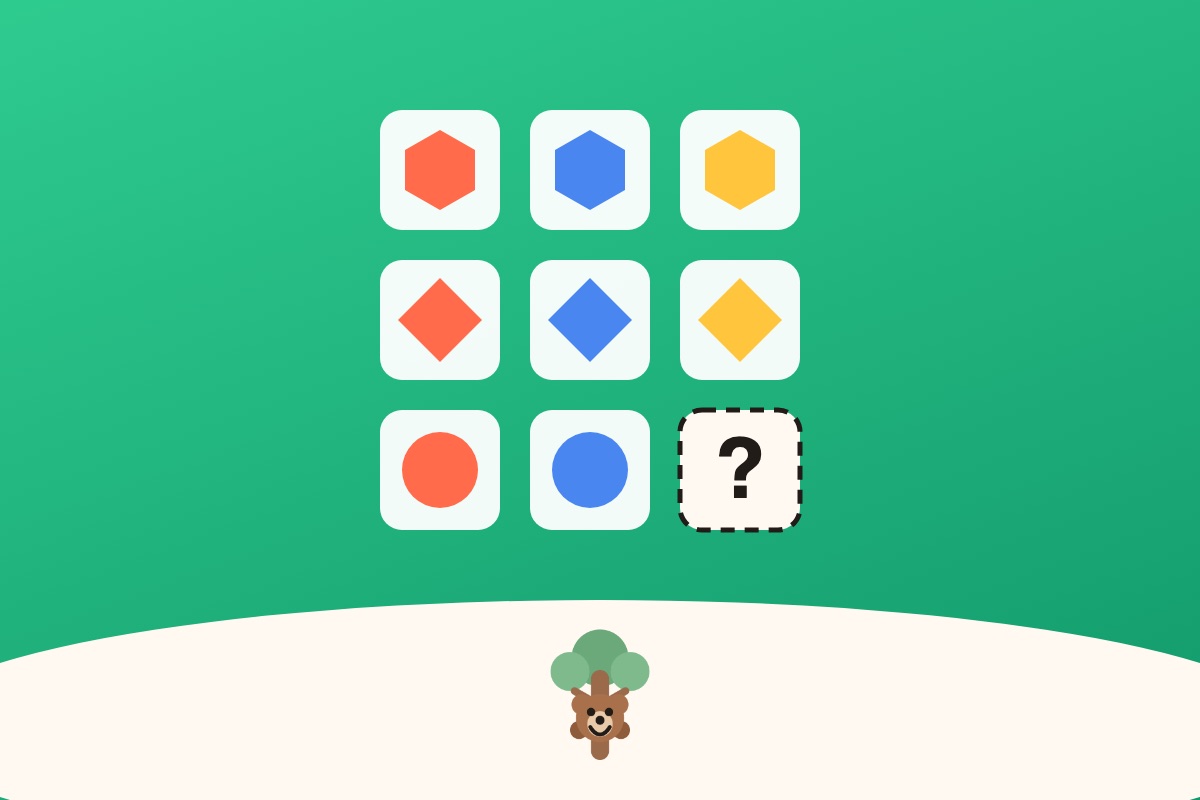 CogAT, NNAT or OLSAT? The US gifted tests, side by sideThe three reasoning tests US districts use most for gifted and talented programs: what each measures, the grades it covers, and what it doesn't test.
- Gifted testing
- United States
 Referral or screening everyone? How US schools find gifted kidsWhat happened when a large Florida district tested every second grader instead of waiting for referrals — and what it means for your child.
- Gifted testing
- United States
Cub Climb is not affiliated with, endorsed by, or connected to any school board, test publisher or testing organisation. CogAT, NNAT, OLSAT, CCAT-7, CAT4 and other test names are trademarks of their respective owners.