Music exams around the world: ABRSM, Trinity, RCM and AMEB
11 October 2026 · 6 min read
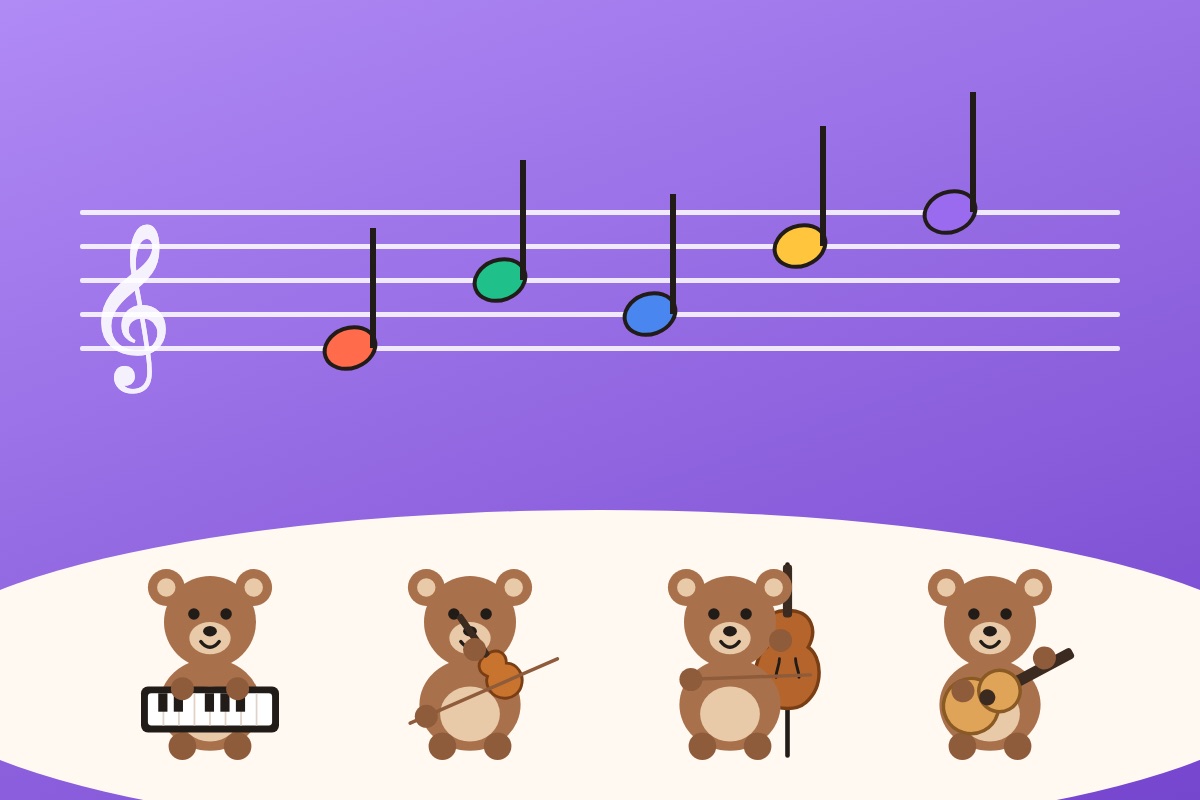
Graded music exams give a child a goal, a certificate and a clear next step. Four boards cover most of the English-speaking world, and each has a gentle first level for beginners. Here is what each one is, and what they have in common: every one of them expects a child to read.
ABRSM (UK and worldwide)
ABRSM runs graded exams from Initial Grade to Grade 8 in many countries. For absolute beginners there is the Prep Test, a relaxed first assessment with no pass or fail. Initial Grade on piano comes two ways: a Performance version, four pieces recorded on video, or a Practical version in person, with three pieces, scales, sight-reading and aural tests. Sight-reading means a short piece the child hasn’t seen before, with half a minute to look it over first.
Trinity College London (UK and worldwide)
Trinity’s exams run from Initial — an introduction to exams, below Grade 1, in many instruments — to Grade 8. There are no formal entry requirements and no theory exam needed first. Exams can be taken in person or digitally, and in-person exams include supporting tests such as aural, improvisation and musical knowledge.
The Royal Conservatory, RCM (Canada and the US)
The RCM Certificate Program starts at the Preparatory levels and runs through Levels 1 to 10 to the Associate diploma, with exam centres across Canada and in many US states. Each level is paired with a theory level, but a separate theory exam isn’t required until practical Level 5.
AMEB (Australia)
AMEB’s syllabuses start at Grade 1, and many also have a Preliminary grade. Its Grade 1 piano exam is for children who have usually been learning for six months to a year, and includes pieces, technical work, aural tests, sight-reading and general knowledge.
What every first exam has in common
- Reading notes on the staff, in the clef of the child’s instrument — fluently enough to play from the page.
- Note lengths and simple rhythms, so the music is played in time as well as in tune.
- Sight-reading, at most boards: a short, unseen piece. It is the part of an exam that most directly tests reading, and the hardest to cram.
Quarter note or crotchet? A glossary
American and Canadian books use the first names; British and Australian books, and ABRSM and AMEB, often the second.
| US and Canada | UK and Australia |
|---|---|
| Whole note | Semibreve |
| Half note | Minim |
| Quarter note | Crotchet |
| Eighth note | Quaver |
| Sixteenth note | Semiquaver |
| Measure | Bar |
| Staff | Stave |
Building the reading underneath
Exam pieces are practised for weeks; sight-reading can’t be. What makes it easier is fluent note reading — knowing every note in the clef without counting up the lines. Cub Climb Melody builds exactly that, for piano, strings, guitar, recorder, flute, clarinet and trumpet, from a first note to key signatures, with a second climb for note lengths, rests, time signatures and loudness. It is not affiliated with any exam board. See how Melody works · five-minute note games for home.
Sources
From the makers of this blog
Cub Climb Melody — a child learns to read music, one note at a time
- A note, its name, its sound. A note sits on the staff, your child taps its name, and it plays on their own instrument — piano, violin, cello, guitar, recorder and more.
- Help that fades. Each note starts in its colour and fades to plain ink as it is learned, so a child is really reading.
- Notes come back just before they would be forgotten. For ages 3 and up, with everything spoken for the youngest.
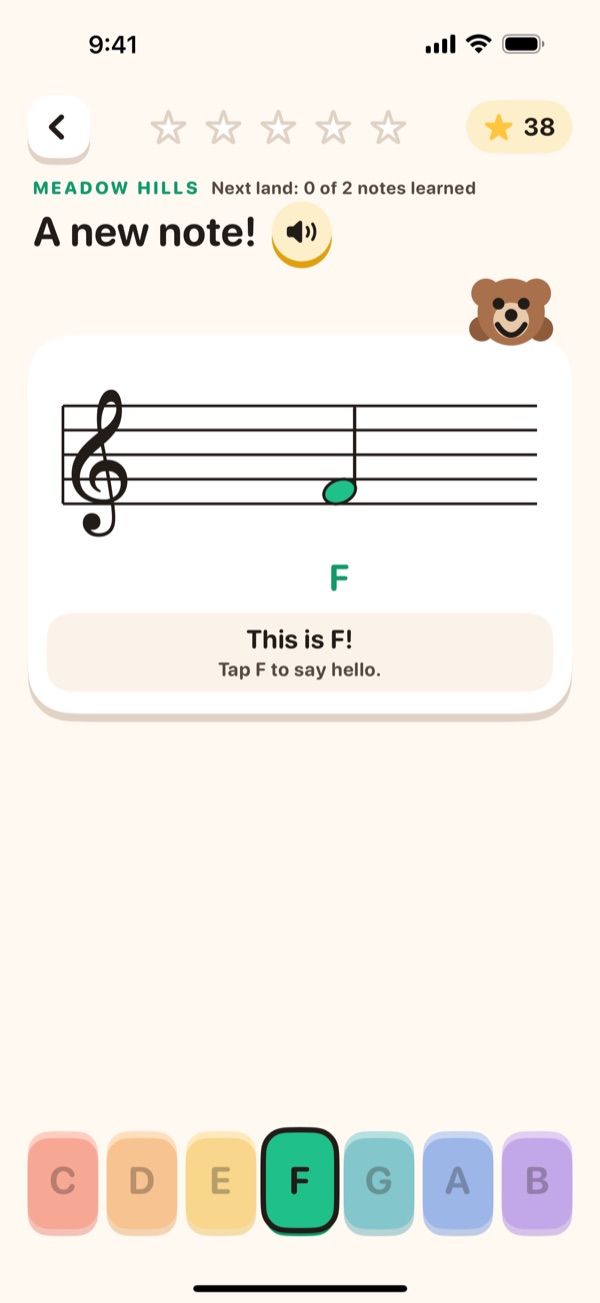
Free to start, then one purchase for the whole family, with nothing to renew. See how it works.
More from the blog
 How to teach a child to read music, ages 3 to 8What children can learn when, why sound comes before symbols, and a calm, five-minute way to start reading notes at home — even if you don't read music.
- Reading music
- How children learn
 Treble or bass clef first? It depends on the instrumentWhich clef your child reads first, and which notes, depends on what they play. A guide for piano, violin, viola, cello, guitar, recorder and more.
- Reading music
 Do-Re-Mi or C-D-E? Letter names, fixed do and movable doWhy some teachers say C and others say Do, the difference between fixed and movable do, and which one helps your child read music.
- Reading music
- How children learn
Cub Climb is not affiliated with, endorsed by, or connected to any school board, test publisher or testing organisation. CogAT, NNAT, OLSAT, CCAT-7, CAT4 and other test names are trademarks of their respective owners.