What a gifted test score means — and what it doesn’t
11 October 2026 · 5 min read
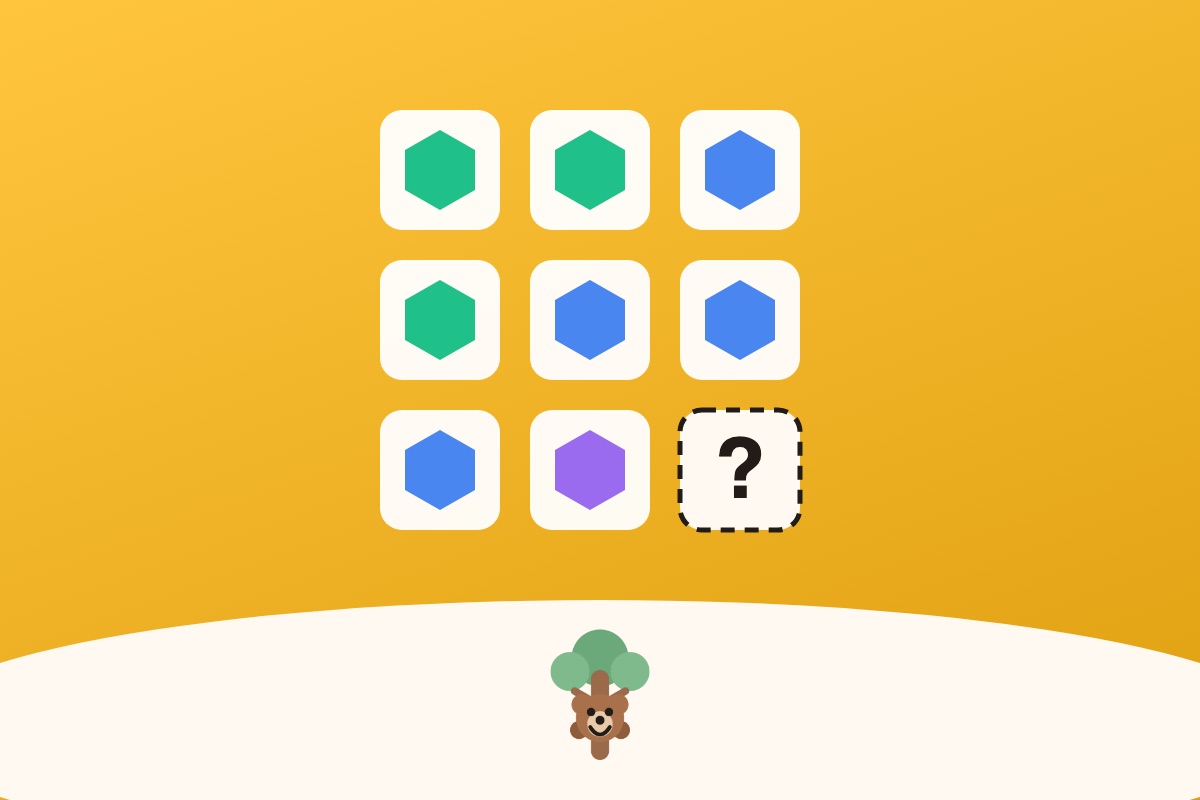
The letter home has a number on it — 118, or the 89th percentile, or a stanine of 7 — and a sentence about whether your child goes on to the next step. Here is what those numbers mean, using the CogAT’s scores as the example, and what none of them can tell you.
The three numbers you will see
- Standard Age Score (SAS). The CogAT’s main score. 100 is typical for a child’s age, and the scale’s standard deviation is 16, so most children score between about 84 and 116.
- Percentile rank. The share of children in the comparison group who scored lower. The 50th percentile is average; the 90th means your child scored higher than 90 in 100.
- Stanine. A one-to-nine band. 4 to 6 is average, 7 to 9 above average.
Other tests use the same ideas under other names: the OLSAT, for example, reports a School Ability Index with percentile ranks and stanines.
Age or grade?
A score can compare your child with others of the same age or in the same grade, nationally or within your district. A young child in their grade can look stronger on age norms than on grade norms. The report says which comparison each number uses.
What a score can’t tell you
- How your child does on a different day. Every test has some measurement error, so a score is better read as a range than a point.
- What they will achieve. These tests measure reasoning on one occasion, not effort, curiosity or what they go on to learn.
- Whether they are “gifted”. That is a decision a school makes, usually from more than one piece of evidence and against its own cut-off.
The skill under the score
A reasoning score isn’t fixed: the skill behind it — finding a rule and applying it — grows with the right kind of practice, especially practice that asks a child to explain. Why asking “how do you know?” helps.
Sources
From the makers of this blog
Cub Climb: Gifted Test Prep — reasoning puzzles that ask “why?”
- All three kinds of reasoning: words, numbers and shapes, nine puzzle types, 3,600+ original puzzles for ages 8 to 14 (grades 3 to 8).
- Answer, then say why. One star for the answer, a second for naming the rule, then the cub explains it in plain words.
- Puzzles follow your child, missed ones come back after 1, 3, 8, 20 and 50 days, and up to four children can each have their own climb.
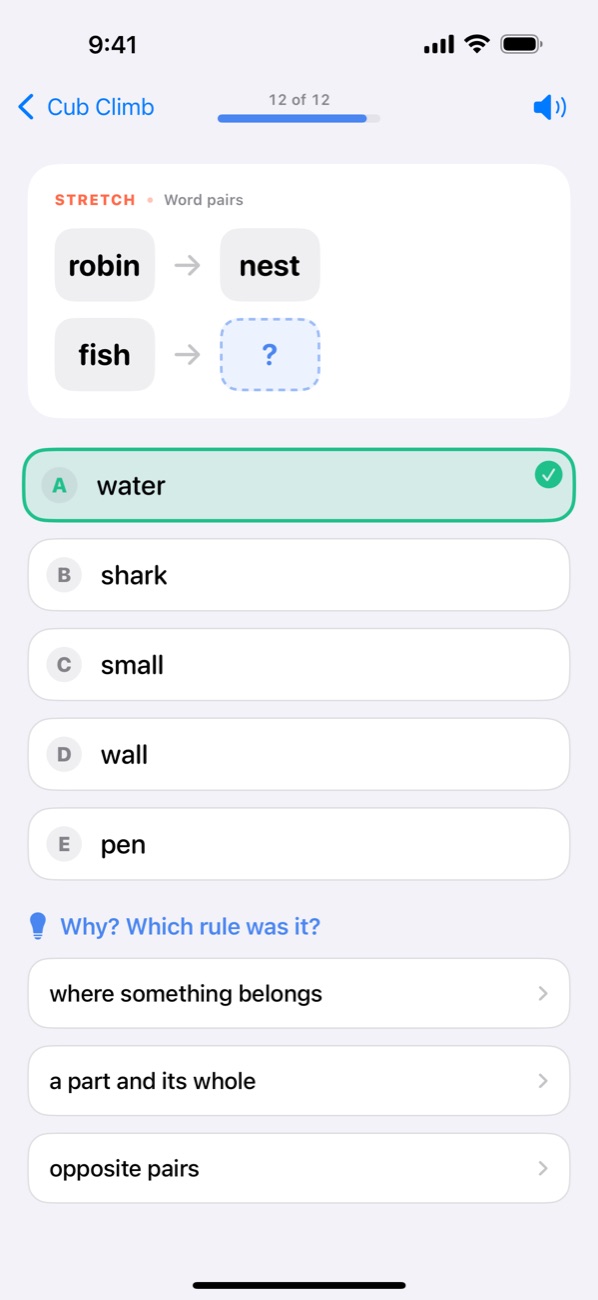
The first 20 puzzles are free. Then a season pass that never renews, or a monthly plan. See how it works.
 Android: coming soon
More from the blog
 How to teach a child to read music, ages 3 to 8What children can learn when, why sound comes before symbols, and a calm, five-minute way to start reading notes at home — even if you don't read music.
- Reading music
- How children learn
 Do-Re-Mi or C-D-E? Letter names, fixed do and movable doWhy some teachers say C and others say Do, the difference between fixed and movable do, and which one helps your child read music.
- Reading music
- How children learn
 CogAT, NNAT or OLSAT? The US gifted tests, side by sideThe three reasoning tests US districts use most for gifted and talented programs: what each measures, the grades it covers, and what it doesn't test.
- Gifted testing
- United States
Cub Climb is not affiliated with, endorsed by, or connected to any school board, test publisher or testing organisation. CogAT, NNAT, OLSAT, CCAT-7, CAT4 and other test names are trademarks of their respective owners.