OC and selective school tests in NSW and Victoria
11 October 2026 · 5 min read
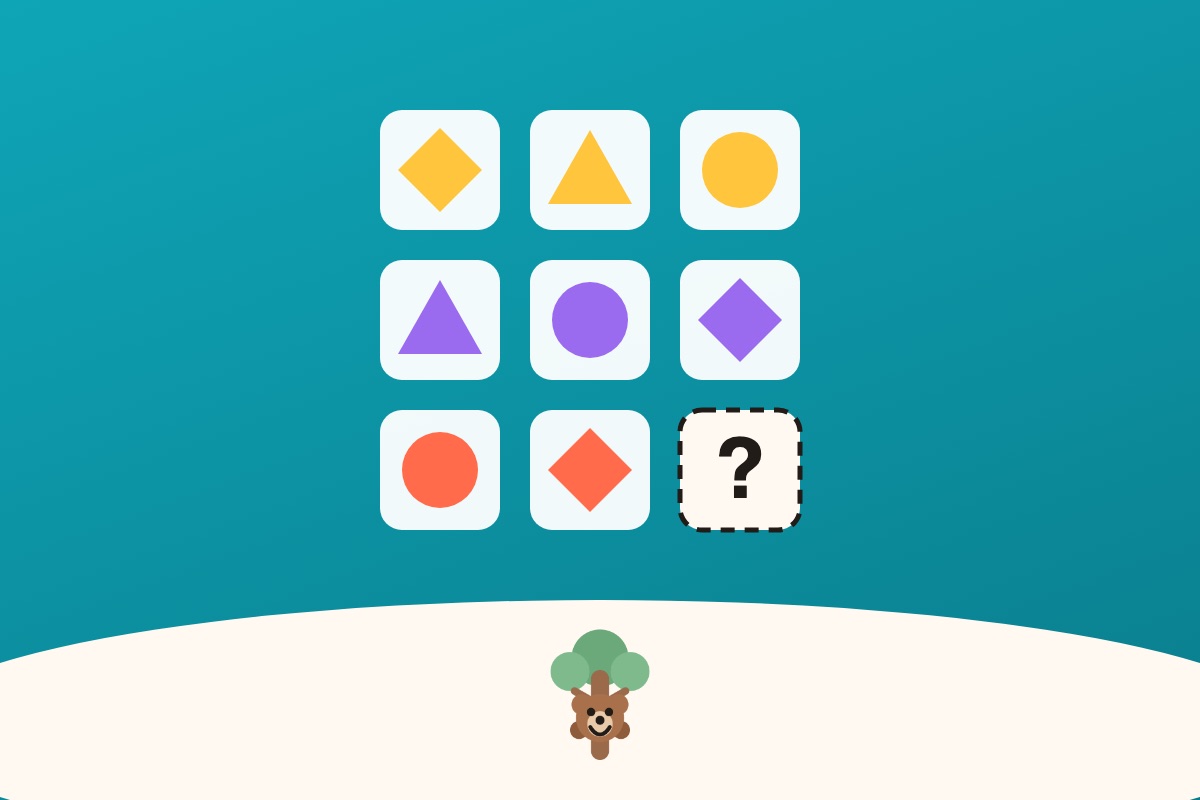
In New South Wales, two tests open the door to classes for high-potential and gifted students: the Opportunity Class Placement Test in Year 4 and the Selective High School Placement Test in Year 6. Victoria has its own exam, for Year 9. Here is what each one asks.
The NSW Opportunity Class test (Year 4)
Children in Year 4 sit it in May for a place in a Year 5 opportunity class. It is taken on a computer the Department provides, at a local test centre, and has three parts:
- Reading — 40 minutes.
- Mathematical Reasoning — 40 minutes.
- Thinking Skills — 30 minutes.
For 2027 entry it was held on 8 and 9 May 2026. From 2026 the tests are held only in NSW, so a family overseas or interstate has to travel for it.
The NSW selective high school test (Year 6)
The same three parts, a little longer — Reading 45 minutes, Mathematical Reasoning 40 and Thinking Skills 40 — plus a 30-minute Writing test. Children sit it in May of Year 6 for a place in Year 7.
What “Thinking Skills” means
The Department publishes practice tests, with answers and explanations. Their Thinking Skills questions mix three things: logic about arguments (which statement best supports a claim), spatial reasoning, and sequence and puzzle problems. The first is close to critical reading; the other two are the same rule-finding gifted tests elsewhere look at.
Victoria’s selective entry exam (Year 8)
Four selective entry high schools — Mac.Robertson Girls’, Melbourne High, Nossal and Suzanne Cory — take about 1,000 students into Year 9 each year. Students sit the exam in Year 8; in 2026 it was on 20 June. It looks at higher-order thinking, problem solving, reasoning, comprehension and interpretation, and nothing in it goes beyond the Year 8 curriculum.
How Cub Climb fits in
Cub Climb’s puzzles practise the rule-finding side of Thinking Skills — series, number puzzles, shape patterns and paper folding — with your child explaining each answer. They don’t teach the reading, maths or argument-logic sections. In NSW, Year 4 is grade 4 in the app. Tests in Australia, in detail.
Sources
From the makers of this blog
Cub Climb: Gifted Test Prep — reasoning puzzles that ask “why?”
- All three kinds of reasoning: words, numbers and shapes, nine puzzle types, 3,600+ original puzzles for ages 8 to 14 (grades 3 to 8).
- Answer, then say why. One star for the answer, a second for naming the rule, then the cub explains it in plain words.
- Puzzles follow your child, missed ones come back after 1, 3, 8, 20 and 50 days, and up to four children can each have their own climb.
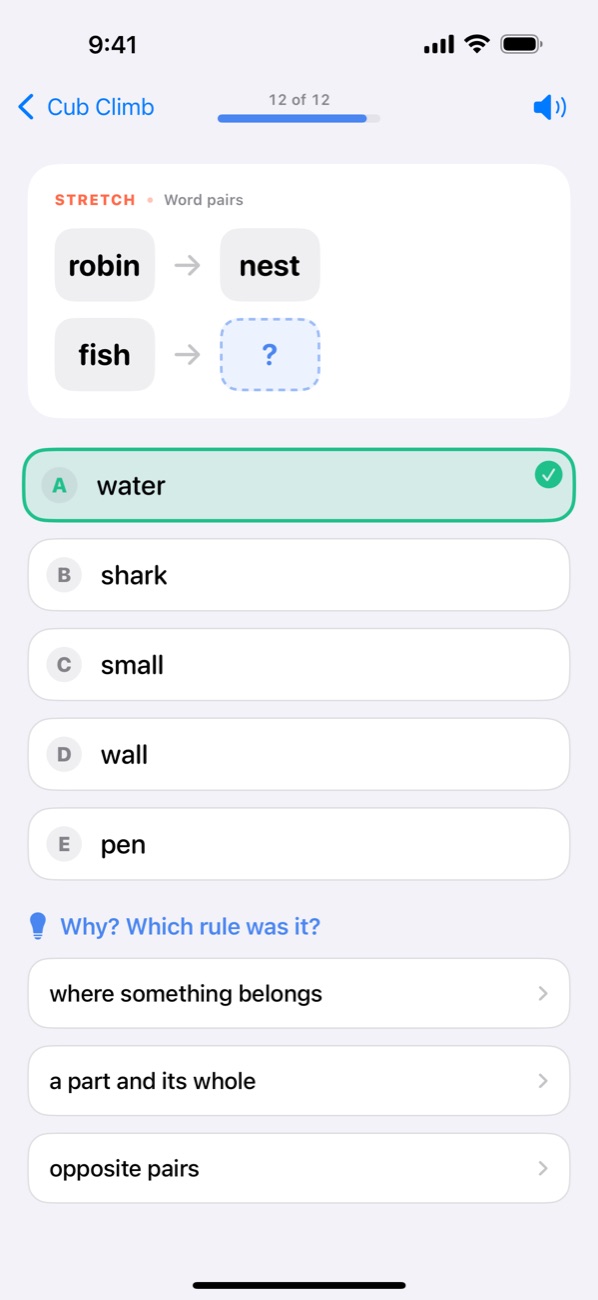
The first 20 puzzles are free. Then a season pass that never renews, or a monthly plan. See how it works.
 Android: coming soon
More from the blog
 Music exams around the world: ABRSM, Trinity, RCM and AMEBThe first music exams in the UK, Canada, the US and Australia, what they ask a beginner to read, and a quarter-note-to-crotchet glossary.
- Reading music
- United Kingdom
- United States
- Canada
- Australia
 CogAT, NNAT or OLSAT? The US gifted tests, side by sideThe three reasoning tests US districts use most for gifted and talented programs: what each measures, the grades it covers, and what it doesn't test.
- Gifted testing
- United States
 Referral or screening everyone? How US schools find gifted kidsWhat happened when a large Florida district tested every second grader instead of waiting for referrals — and what it means for your child.
- Gifted testing
- United States
Cub Climb is not affiliated with, endorsed by, or connected to any school board, test publisher or testing organisation. CogAT, NNAT, OLSAT, CCAT-7, CAT4 and other test names are trademarks of their respective owners.