No app can teach music. Here’s the one thing a good one can
18 October 2026 · 5 min read
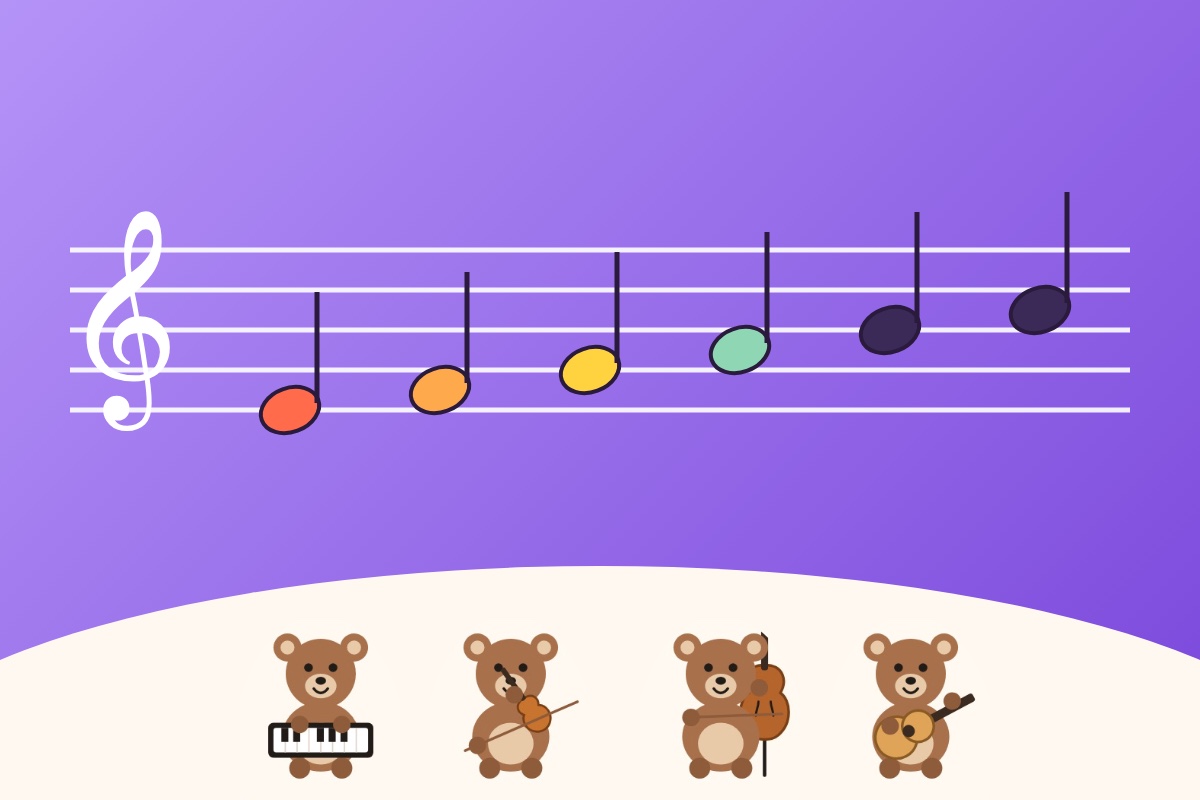
Plenty of music apps promise to teach your child music. None of them can, and we make one, so you should know that up front. What a good app can do is smaller than the promise, and much easier to judge. Here is what that is, and how to tell.
Music is several skills, and reading is one
- Listening. Hearing music in your head before you play it. Edwin Gordon called it “audiation”, and the best-known ways of teaching children music, from Kodály to Suzuki, put sound first and symbols after.
- Playing. The body part: posture, breath, bow, fingers, tone.
- Keeping time with other people. Rhythm you feel, and an ensemble you can hear.
- Reading notation. Look at a note, know its name, know how it sounds.
- Making it up. Changing a tune, inventing one.
An app that says it teaches “music” is claiming all five. Very little on a screen can.
What an app can’t do
- Hear your child play and tell them the tone is thin or the note is flat. Ours can’t either: Melody has no microphone, so it never listens.
- Show a hand how to hold a bow, or a back how to sit at a piano.
- Play with them, in time, so they feel an ensemble.
- Notice, the way a teacher does, that today is a day for something easier.
For an instrument, a teacher and the instrument itself do those jobs. If an app suggests it can stand in for them, that is the one to close.
The one narrow job a good app can do
Reading notes fluently is mostly a memory job: many short, repeated looks until a note’s name arrives without thinking. A screen is patient, and it can bring a note back at the right moment, which is what spacing research is about. Across that research, practice spread over several sessions tends to be remembered longer than the same practice in one block. The spacing effect for parents.
The idea is that once the names are automatic, time with a teacher can go on the music rather than on working out which note is which. That is our reasoning, not a finding, but it is a small enough claim to check yourself: after a few weeks, does your child read the notes of their first pieces without stopping?
Six questions before you download any music app
- Does every note come with its sound? A note learned only as a picture is half a note.
- Is it the sound of your child’s instrument? A cellist who hears a piano is learning something else.
- Does the help go away? Colours and labels are scaffolding. If they never fade, a child learns the colours, not the notes.
- Do notes come back for review, or does it just march on to new ones?
- What does it ask in return? Ads, an account, a subscription, your child’s data. Read the App Store’s privacy label before the reviews.
- Is a session short? Five minutes a day beats an hour on Sunday, and an app that keeps a young child on for much longer isn’t serving the child.
What Melody does, plainly
A note appears on the staff; your child taps its name, and a right answer plays it in the voice of their own instrument, from nine to choose between. Each note starts in a colour that fades as it is learned, and notes come back for review just before they would be forgotten. From age 5 there is a second climb for rhythm and musical signs. It is free to start, then one purchase covers the whole family with nothing to renew. There are no ads and no account, nothing is analysed, and nothing leaves the device. See how Melody works.
What it doesn’t do is most of the first list: it does not listen, it does not teach technique, and it does not replace a teacher. We haven’t put it through a study. It is built for one skill, reading, and it tries to do that well.
Without any app at all
The same ideas work on paper. Six five-minute note-reading games, the order to teach notes in on how to teach a child to read music, and which clef to start with by instrument.
Sources
- College Music Symposium, vol. 31: Music Learning Theory in collegiate music education (Gordon’s audiation)
- AP School of Arts, Antwerp — Audiation-based learning (sound before sight)
- Bangor University PhD thesis (2001): Teaching pre-school children to perform from conventional music notation — an exploration of different methods
- Cepeda, Pashler, Vul, Wixted & Rohrer (2006). Distributed practice in verbal recall tasks: A review and quantitative synthesis. Psychological Bulletin, 132(3)
From the makers of this blog
Cub Climb Melody — a child learns to read music, one note at a time
- A note, its name, its sound. A note sits on the staff, your child taps its name, and it plays on their own instrument — piano, violin, cello, guitar, recorder and more.
- Help that fades. Each note starts in its colour and fades to plain ink as it is learned, so a child is really reading.
- Notes come back just before they would be forgotten. For ages 3 and up, with everything spoken for the youngest.
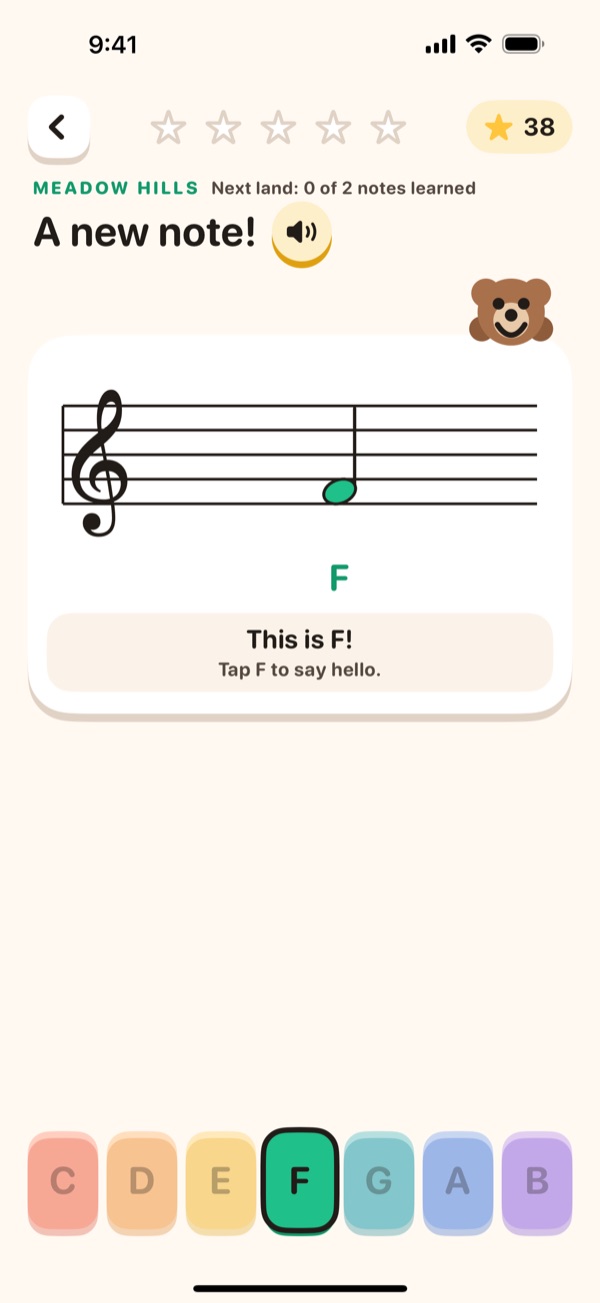
Free to start, then one purchase for the whole family, with nothing to renew. See how it works.
More from the blog
 How to teach a child to read music, ages 3 to 8What children can learn when, why sound comes before symbols, and a calm, five-minute way to start reading notes at home — even if you don't read music.
- Reading music
- How children learn
 Do-Re-Mi or C-D-E? Letter names, fixed do and movable doWhy some teachers say C and others say Do, the difference between fixed and movable do, and which one helps your child read music.
- Reading music
- How children learn
 Boards say don’t prep. Sellers say you must. The evidence?Toronto's board says never prepare; prep sites sell practice tests. A 2025 meta-analysis of 28 studies found modest gains and little from sample items.
- Gifted testing
- How children learn
- Canada
Cub Climb is not affiliated with, endorsed by, or connected to any school board, test publisher or testing organisation. CogAT, NNAT, OLSAT, CCAT-7, CAT4 and other test names are trademarks of their respective owners.